My walks frequently take me through the expansive parking lot of St. Sharbel Maronite Catholic Church, the bustling spiritual center of what seems to be a mainly Lebanese Christian community.
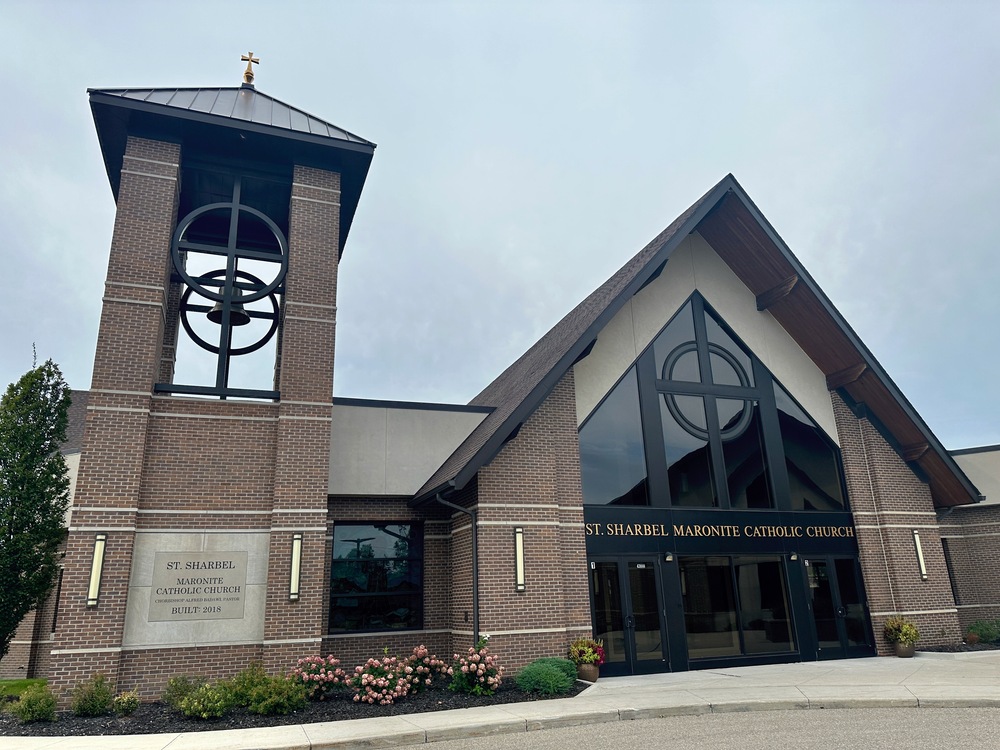
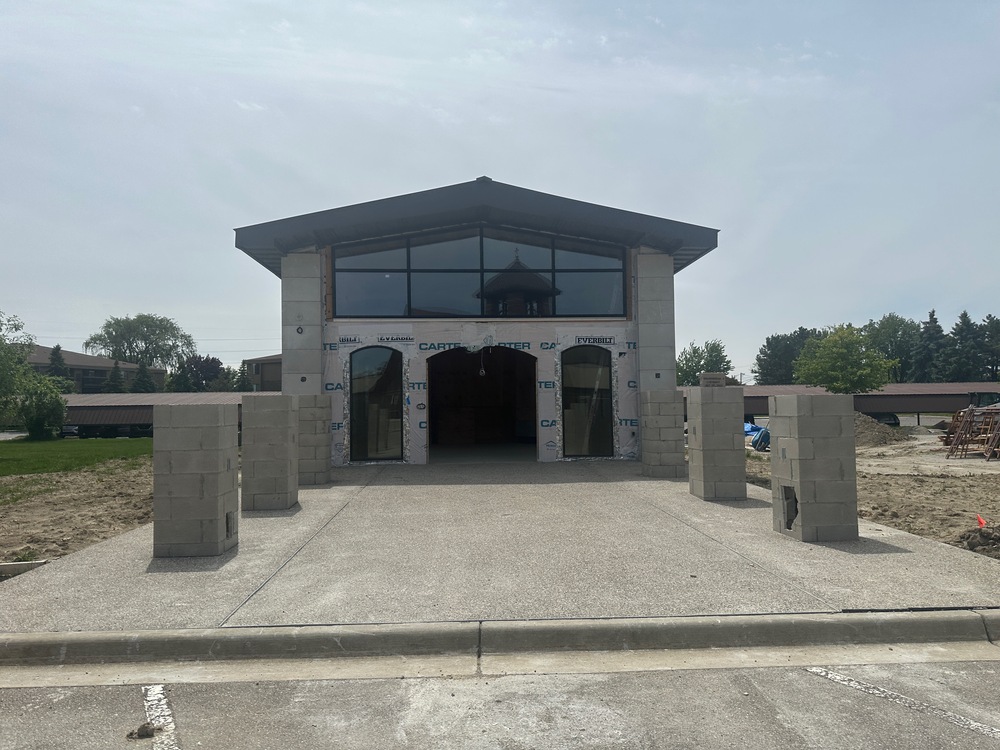
Over the last 10 years, they’ve given this corner of the neighborhood a total makeover, developing a mostly empty field into a big, attractive new church, a house for the pastor, and tons of parking spaces. I’ve been watching them build the latest addition to this empire over the last year, wondering what it was.
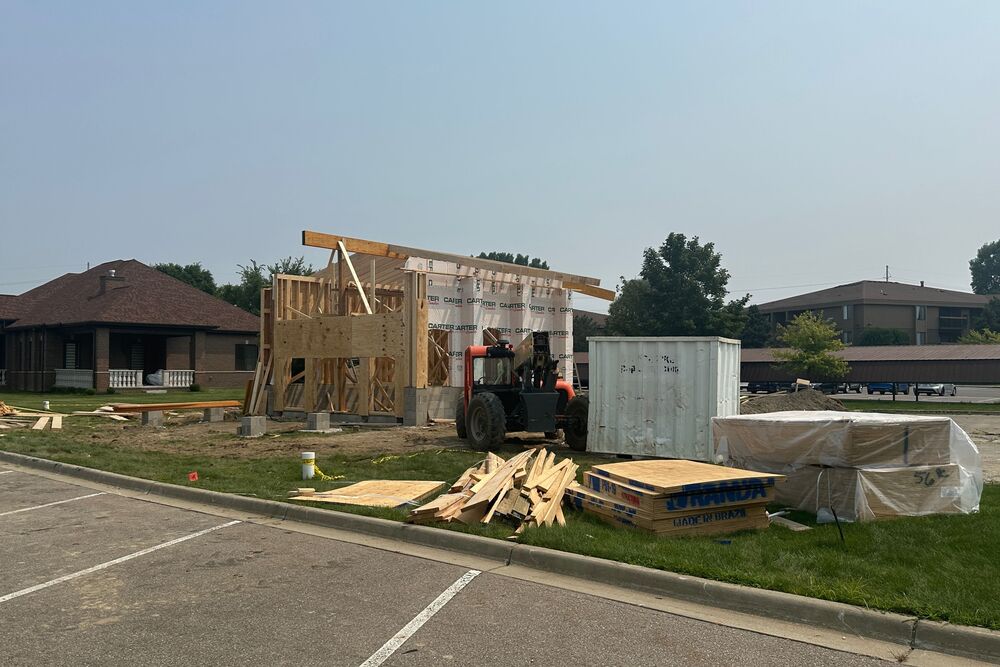
I took an interest in it because, at the time, I spent a lot of my walks listening to the audiobook of “Pillars of the Earth,” a huge novel about people building a cathedral in medieval England. Here before my eyes was “Pillars of the Earth” in amusing suburban miniature.
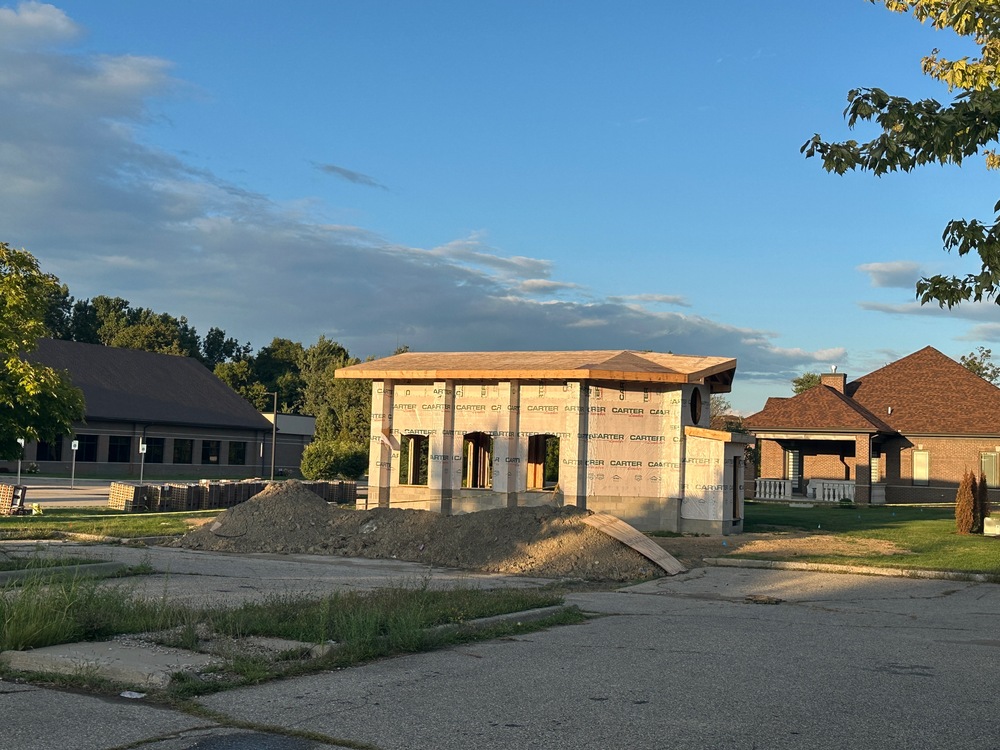
Fast forward through the fall and winter, here it was on May 2, 2026.
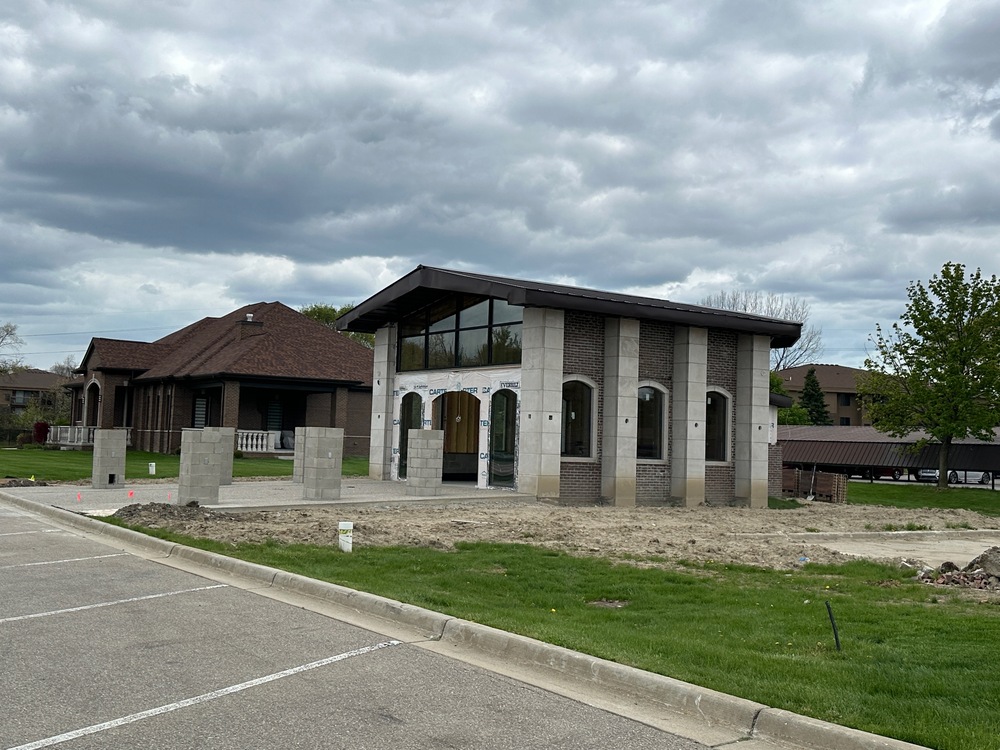
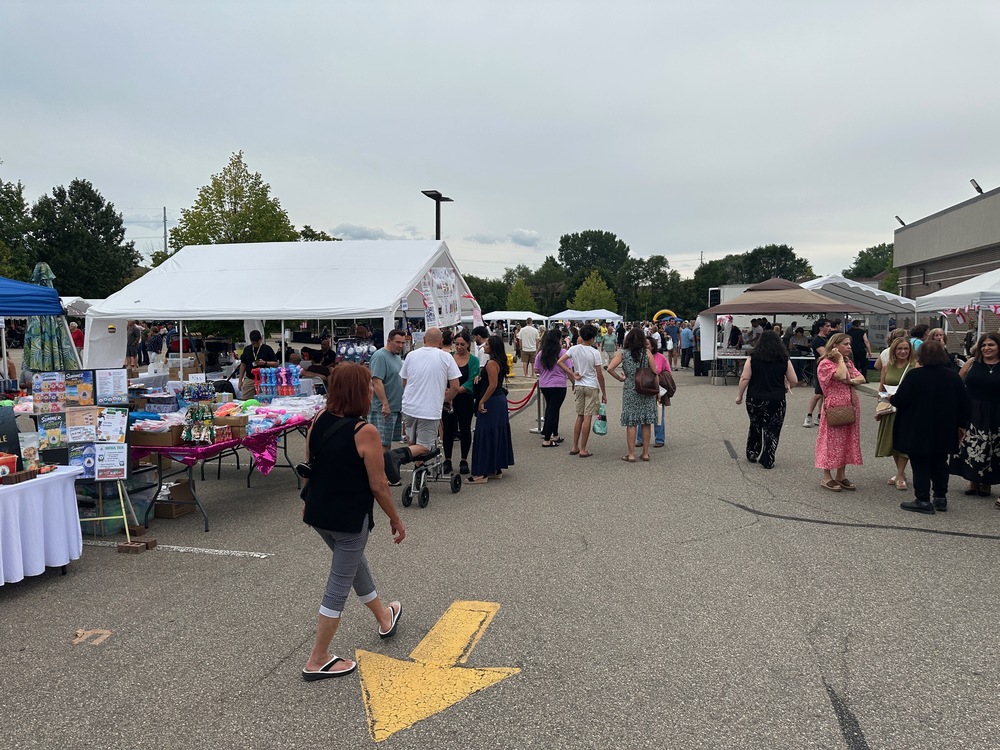
I finally got to go inside and find out what it is a couple weeks ago when the church hosted its annual St. Sharbel Festival, featuring a food truck, bounce house and live music in the parking lot.
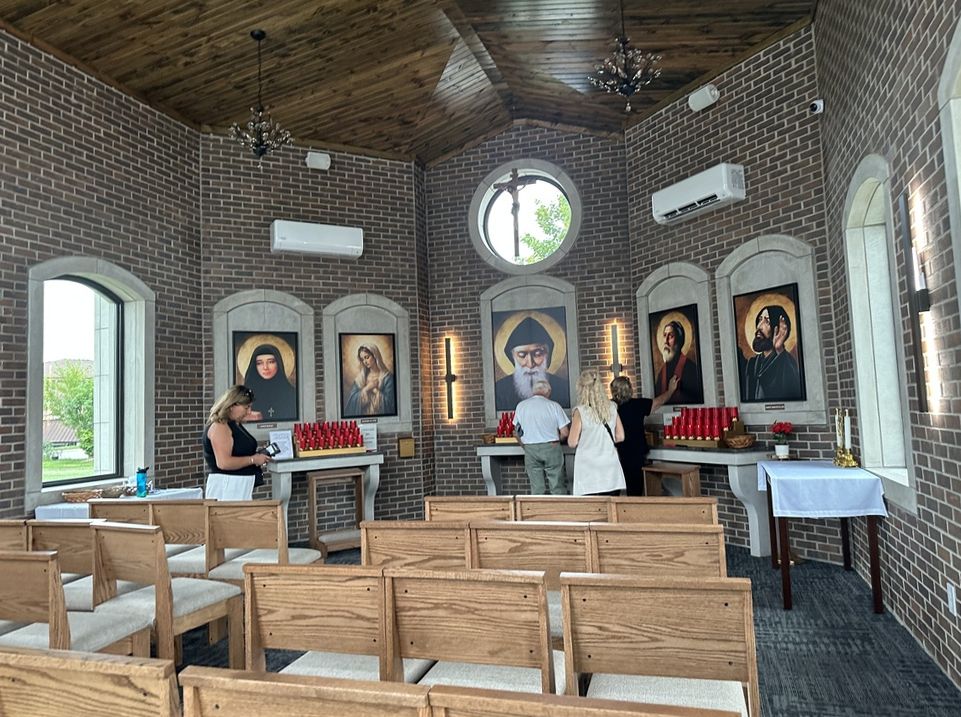
It turns out to be a shrine to St. Sharbel, which is open to the public from 7 a.m. to 11 p.m. St. Sharbel is a Lebanese hermit associated with numerous healing miracles who’s one of the key saints of the Maronite Church, a Christian denomination that’s basically the Lebanese flavor of Christianity. I went in again a couple nights ago while mid-walk, and it was a nice, cool, peaceful sit.
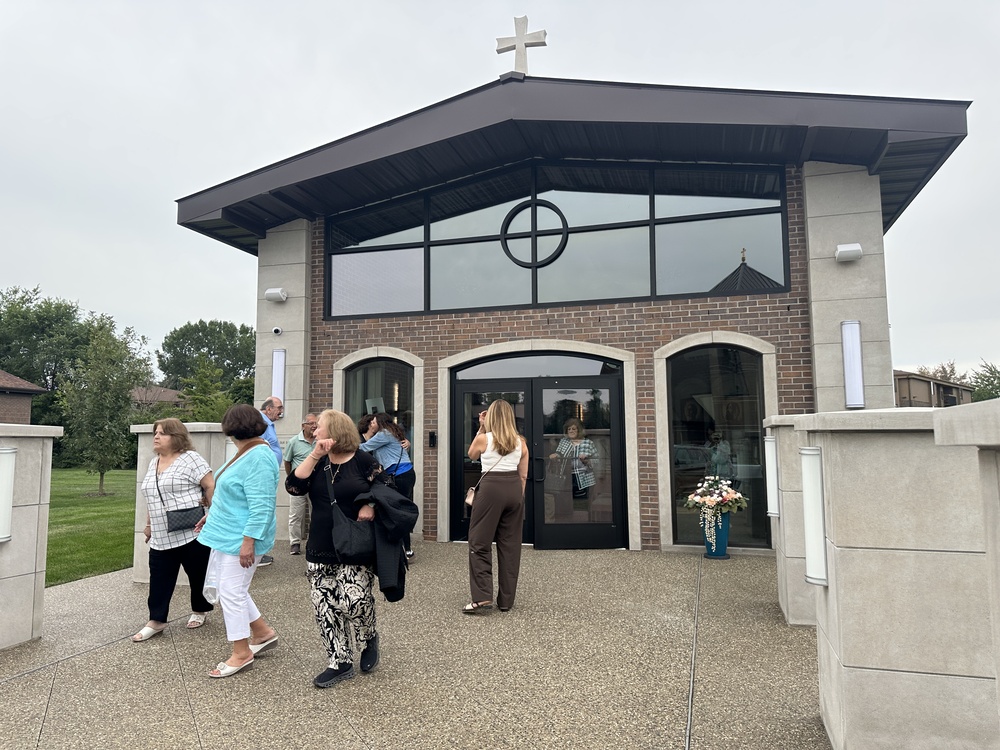
The shrine’s ribbon cutting was on July 19. These videos on Facebook show a vast crowd filling the parking lot outside the shrine, then flooding inside after the ribbon was cut. I had no idea this was going on that day, but happen to have been at Glacier National Park anyway, most likely hiking Grinnell Glacier Trail at the time.
During the construction, there were signs posted saying it was being built by Angelina’s Construction, with the name Al Karana and a couple of phone numbers. I reached out to Al and extracted this comment about his involvement:
“I go to the church every Sunday,” he said. “I like the church. I love the priest, father Fred, he’s the best guy. This guy, when he asks for something, I like to do it for him. He’s a good person, and he likes to make the church look beautiful. And I do that from my heart.”
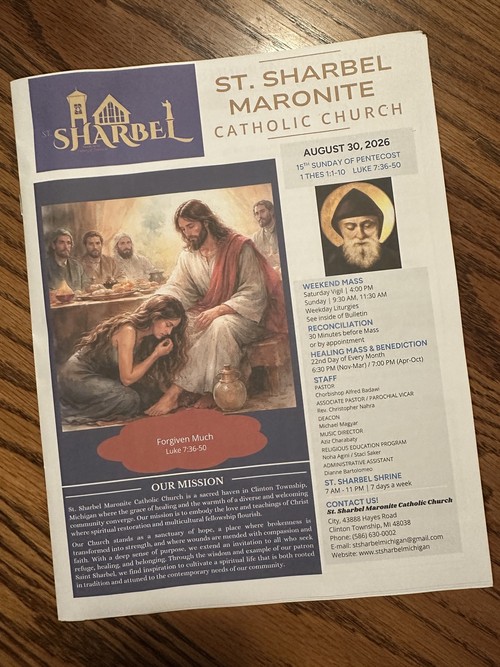
While I was in the shrine, I picked up a church newsletter where Pastor Alfred Badawi laid out the future plans:
The next project for the Shrine is the Stained Glass Windows funded by parishioners, with just one window still available for purchasing for sponsorship.
The church also recently got the Planning Commission’s approval to redevelop the empty, awkward space next to the shrine into even more parking for the church.
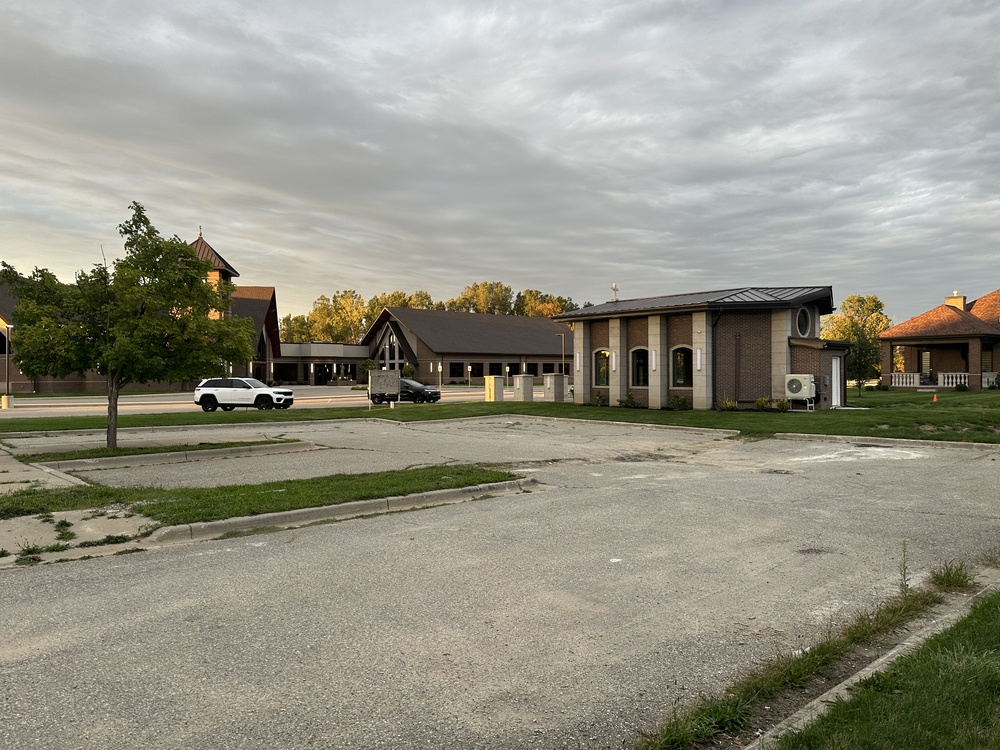
“What this would be is kind of like an auxiliary or a little parking lot,” said Bruce Thompson, director of planning and community development for Clinton Township. “It’s about 6,400 square feet of parking lot. Ultimately, about 24 spaces will be provided in this area, and it will bring the site up to 331 spaces, which is almost twice what the minimum ordinance standard is.”
This church is already surrounded by a huge parking lot, but they do need even more, because when they do their St. Sharbel Festival they overflow into neighboring apartment complexes and strip malls. Part of the reason their current parking lot isn’t enough is because the festival itself takes up most of it.
Pastor Badawi said little during the meeting, but did make a brief comment on the popularity of the shrine.
“It was well done, well built,” he said. “In fact, we see people from all over, they come and visit, even from Lansing, from Grand Rapids, from Toledo, Ohio, Flint, Michigan, they all come to visit.”
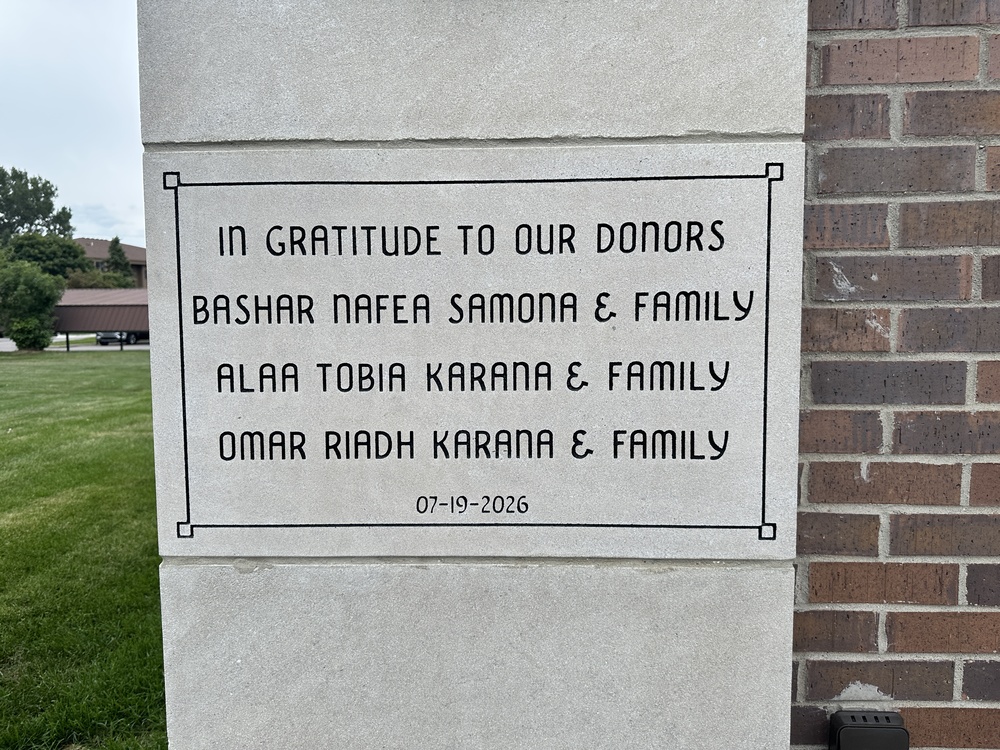
Al Karana’s name and that of his nephew Omar, who recently passed away, are among the names of donors etched on a stone to the left of the door.
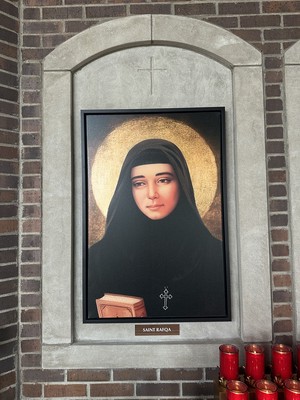
From left to right, the portraits in the shrine are of:
Saint Rafqa, a patron of lost parents and the sick.
Mother of God, because this is a Catholic church.
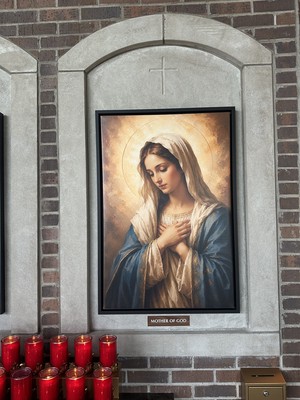
Saint Sharbel, namesake of this church — more on him later.
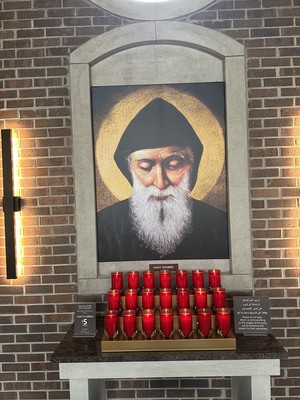
Saint Maron, a fourth-century monk whose followers fostered the Maronite movement.
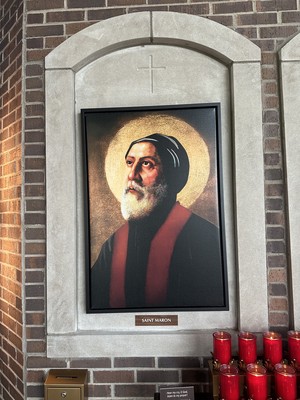
Saint Nimatullah, another Lebanese monk associated with healing miracles.
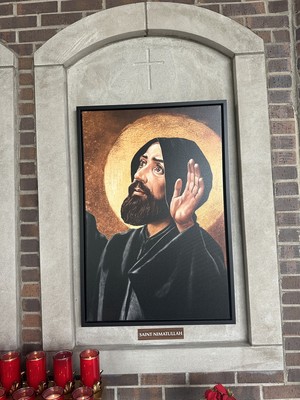
Sharbel was born in a mountain village in Lebanon in 1828 and went into the monastic life at an early age, according to the group Family of Saint Sharbel. After being linked to a miracle in which a lamp he was holding burned with light despite being filled with water instead of oil, he went off to live the last years of his life as a hermit. After he died, things got even more magical, and somewhat grotesque:
People started to report seeing lights around his tomb. When Church authorities opened the tomb, they found Saint Sharbel’s body incorrupt and exuding sweat and blood. … Because of the exuding of sweat and blood, Saint Sharbel’s coffin and tomb had to be changed several times through the years. On July 24, 1927, the body was transferred to a third tomb. … Saint Sharbel’s body continued to bleed and perspire for sixty-five years after his death.
He was beatified, a preliminary step to sainthood, based on two purported miracles in 1965, and 12 years later he was made a saint based on someone’s throat cancer being cured.
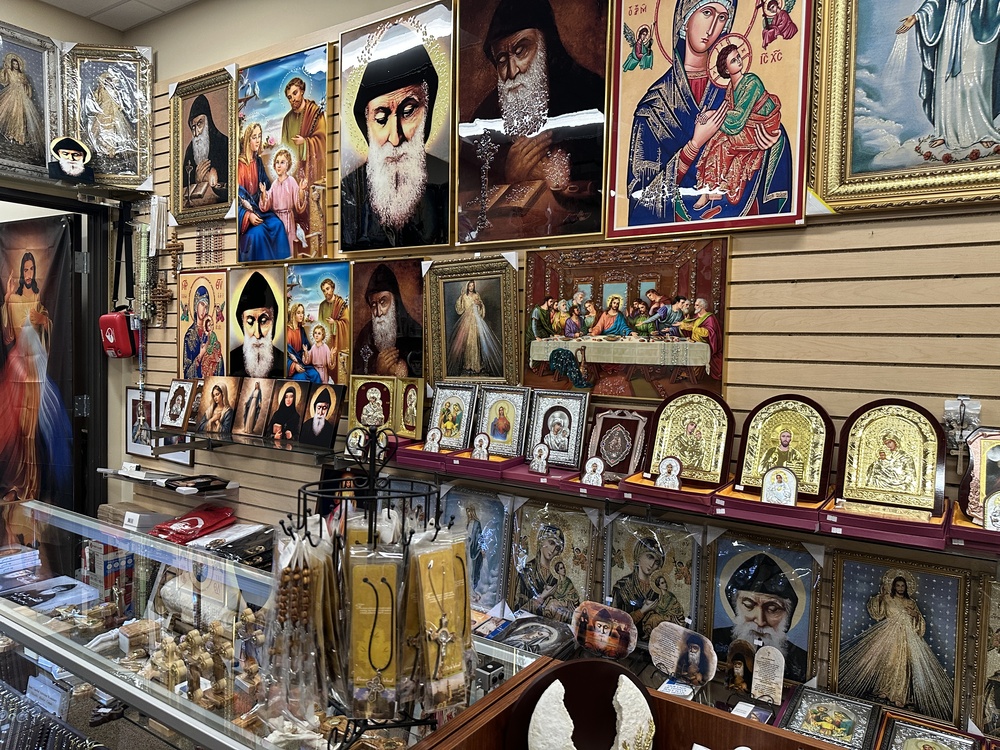
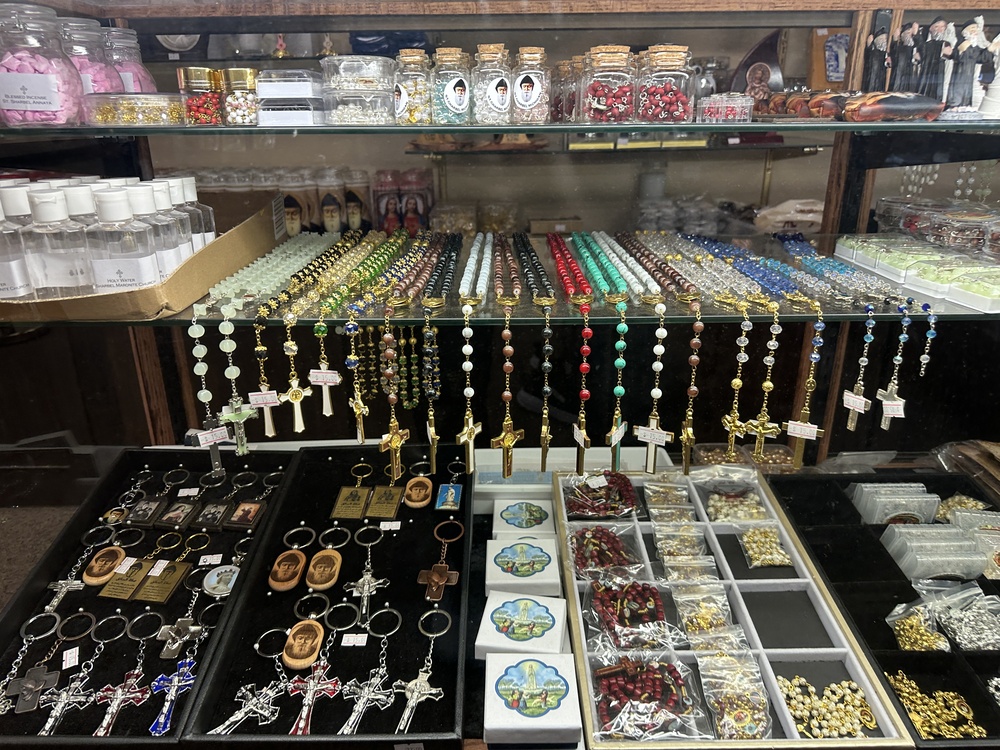
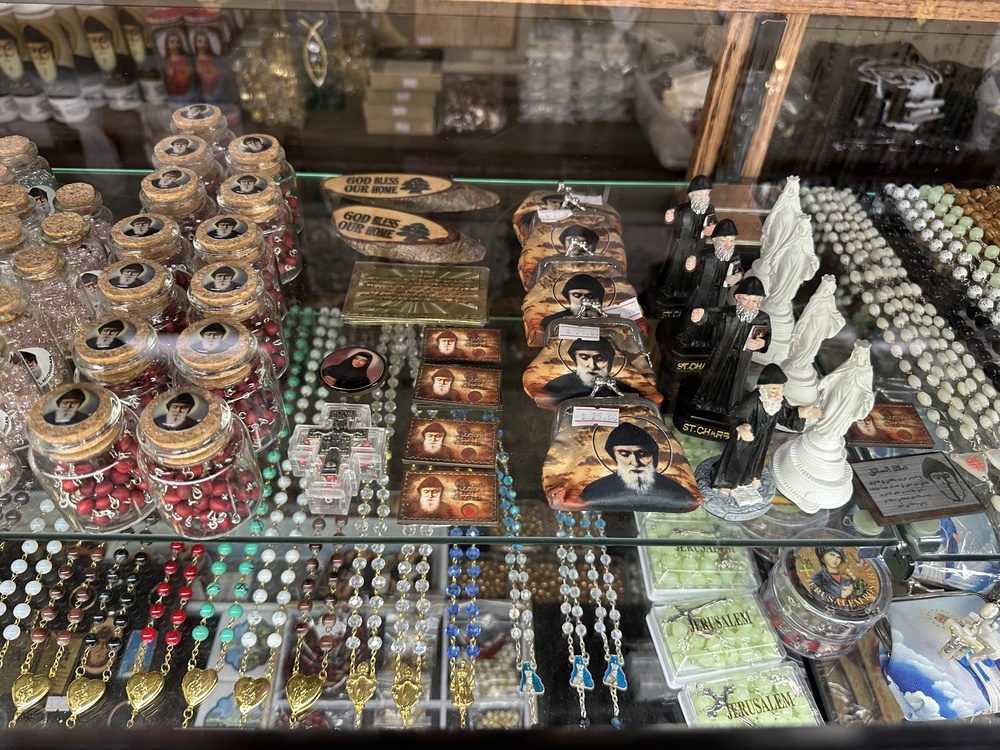
Inside the church, there’s a gift shop dedicated to St. Sharbel, described as “all-new” during the recent St. Sharbel Festival.
Comments
Leave a comment