I listened to this one tonight on a long aimless walk that ended on a playground swing.
The first movement (‘Vivace’) was the first so far to have this name, meaning “a brisk spirited manner.” Lively, dynamic, always seeming to do a new thing from moment to moment, but still with a sense of flow. It was a bit long at nearly 7 minutes, but by the time I wondered how long was left, there were only 10 seconds remaining.
Within the first minute of the second movement (‘Andante’), there’s an interesting mood change from dark and dreary to strangely pleasant. It’s a gradual change that culminates in a cool upward-creeping crescendo (described by Webster as a “strange rising chromatic progression in the transition to the relative major”). The main action of the rest of the movement is shifting between these two moods. The dark mood is particularly dark in this one, with lots of high, weepy strings. Unfortunately, this was another long movement, over 8 minutes long, and too long by half; nothing new seemed to happen for the last few minutes.
As an aside, “andante” is a musical term to denote a tempo of roughly walking speed, and I indeed found myself walking at its tempo.
I mostly found the third movement (‘Minuet and trio’) to be refreshingly light and short compared to its predecessors. It didn’t have a ton of character of its own, though I never thought bad of it.
The fourth and final movement (‘Allegro’) was a fun closer, defined by long runs of quick, punchy notes of a type that felt unique to this symphony. You can hear what I mean from the opening notes. It makes for a very fun feel, and it leads up at a good loud conclusion to the symphony.
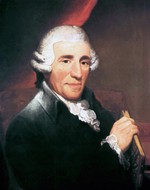
This was overall a pretty strong symphony, certainly one of the better ones so far, though it could have been tightened up a little. It feels wrong, tossing such glib criticism at Joseph Haydn, but hey, I really feel that way.


Version listened to: Academy of Ancient Music/Christopher Hogwood
Length: 22:21
Next up: Symphony No. 36
Comments
Leave a comment