Camilla and I recently passed through the “ghost town” of Ogemaw Springs, Michigan. I put “ghost town” in quotes because that’s how Google Maps labels it, even though there are still some people living here.

The village of Ogemaw Springs, the oldest in Ogemaw County, had its heyday in the late 1800s, supported by a booming lumbering industry. It got its name from the nearby spring that supplied its water. According to the historical marker standing there now, this spring was “the sole supply of water for early settlers” and “supplied water for the boilers of the railroad steam engines that served the area’s lumber industry.”
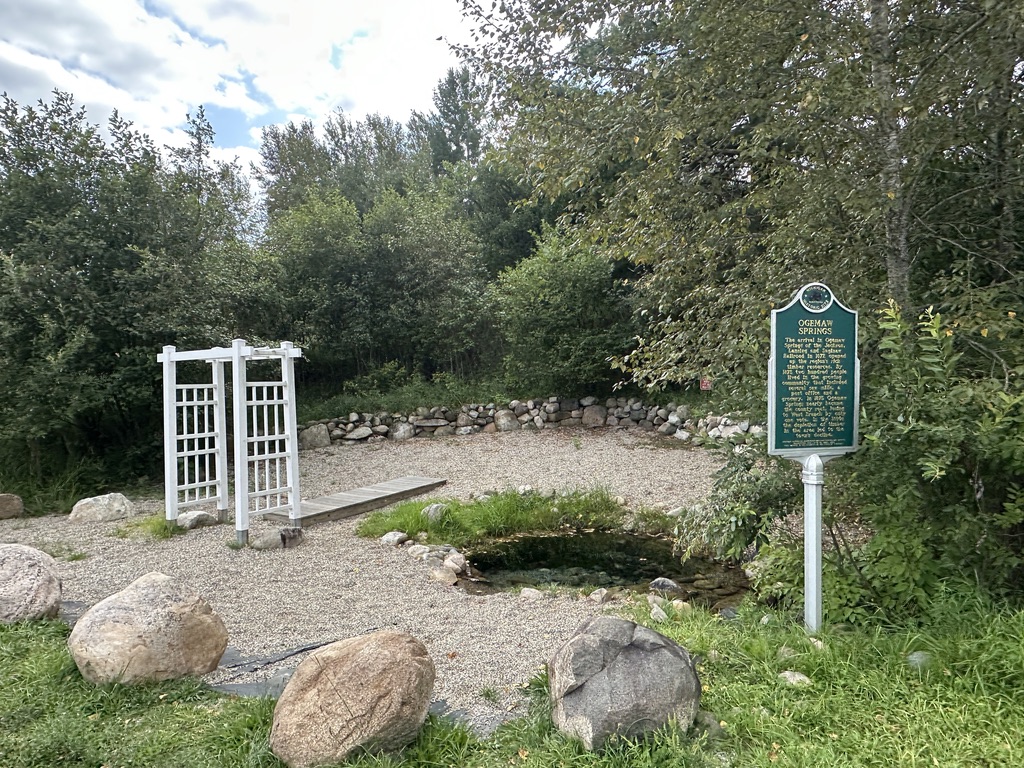
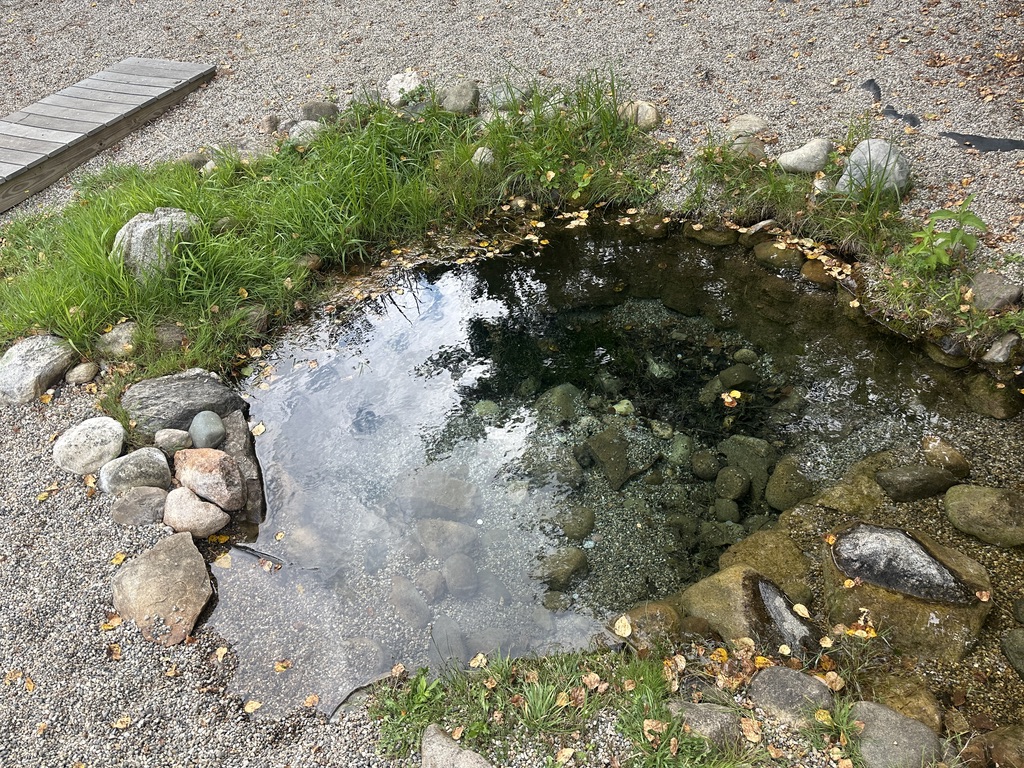
We were surprised to find that this all-nourishing spring was really just a small hole in the ground. Somehow we’d expected… more water? The site also looked like it had been altered and landscaped a fair amount, so we couldn’t be quite sure what we were really looking at.
Since then, I’ve gotten in touch with some locals, including Sherry Wagar and Udo Huff, who live together in the village on property Sherry’s family has owned since the 1950s. They confirmed that this is indeed the spring.
“It used to be bigger around, and deeper,” Sherry said. “There used to even be fish that lived in there, because we would see the fish when we would go to get our water.” She said the spring was “at least a good five feet deep at one point.”
”The girls dared me one time to jump into it,” she said. “I’m 5'4", and I went in up to my chin.”
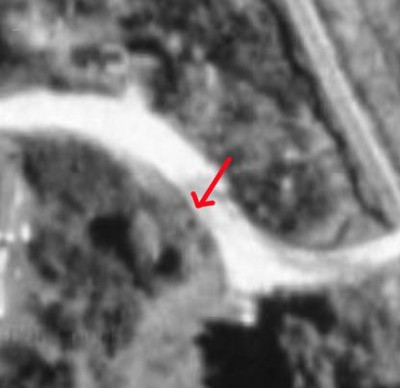
The spring can first be glimpsed on Google Earth in a satellite image from April 28, 1998. It appears as a dark circle, identifiable only by comparison with later, clearer images. The main dirt road through town runs basically right next to it.
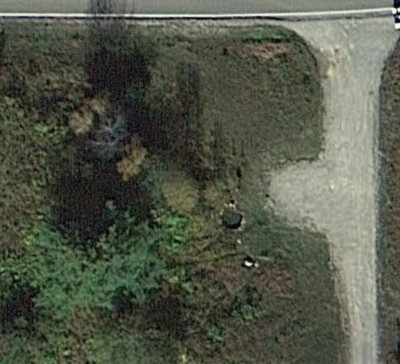
The first clear view comes on October 10, 2013, by which point the road has been paved and reconfigured to be slightly farther from the spring. There’s a small carveout in the grass next to it, but the area is pretty natural looking otherwise.
That changes in 2020, when work started on its current form:
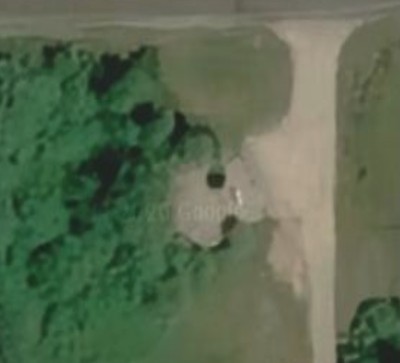
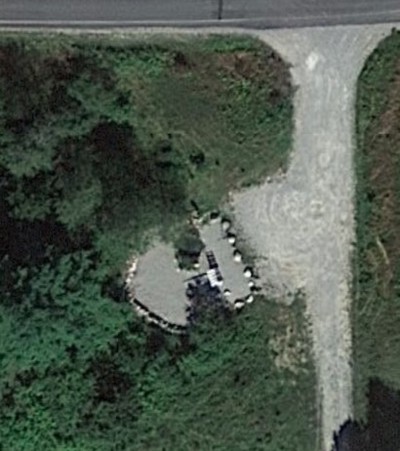
A stroll through Facebook comments reveals that some people have complaints with the “pea gravel” material laid around the spring as part of this project. Sherry echoed those complaints.
“That was the worst thing they could have ever done,” she said. “All of this pea gravel has fallen into it.”
On Facebook, Terrie Clayton posted this photo of “the wishing well before the pea gravel.”
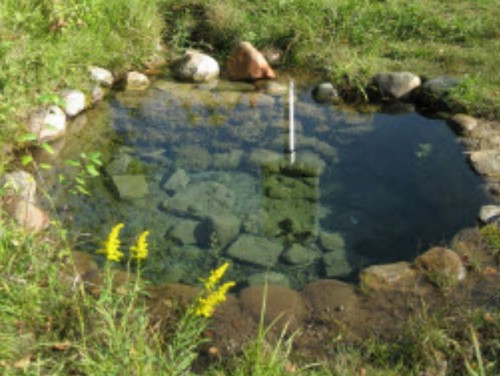
Here are a couple other pieces of local flavor I dug out of Facebook comments:
A lot of wishing has been done there. … After walking there it would be fresh water to drink.
Back in the 70’s we lived about a mile from there, at the end of Grey road, while I was working my wife would walk the kids down there and she’d bring a lunch and bring some water home she had a little wagon. Looks a lot different now
I’m told there are still plans floating around somewhere to further develop this spot into a “picnic area" — if I’m ever able to learn anything more concrete about that, I’ll be back with another post.
Comments
Leave a comment