It’s 25 years today since 9/11, a truly horrible event. I was only 3 years old, so I don’t remember it happening, but it’s still a reliable tear jerker. A single image of the towers on fire contains so much simultaneous, unseen suffering.
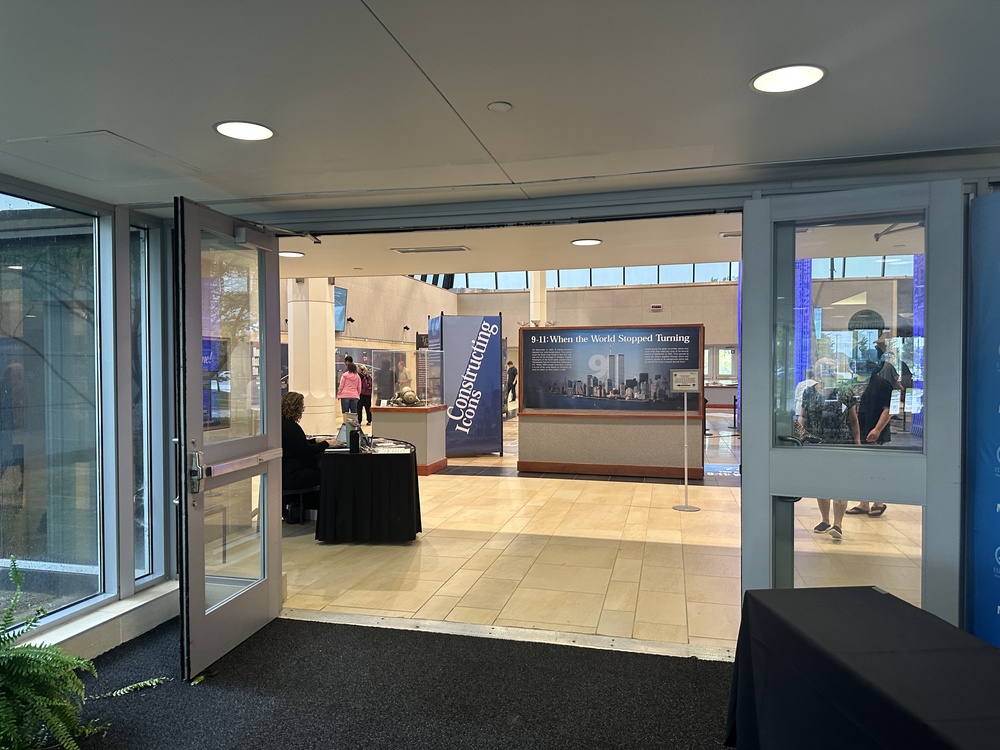
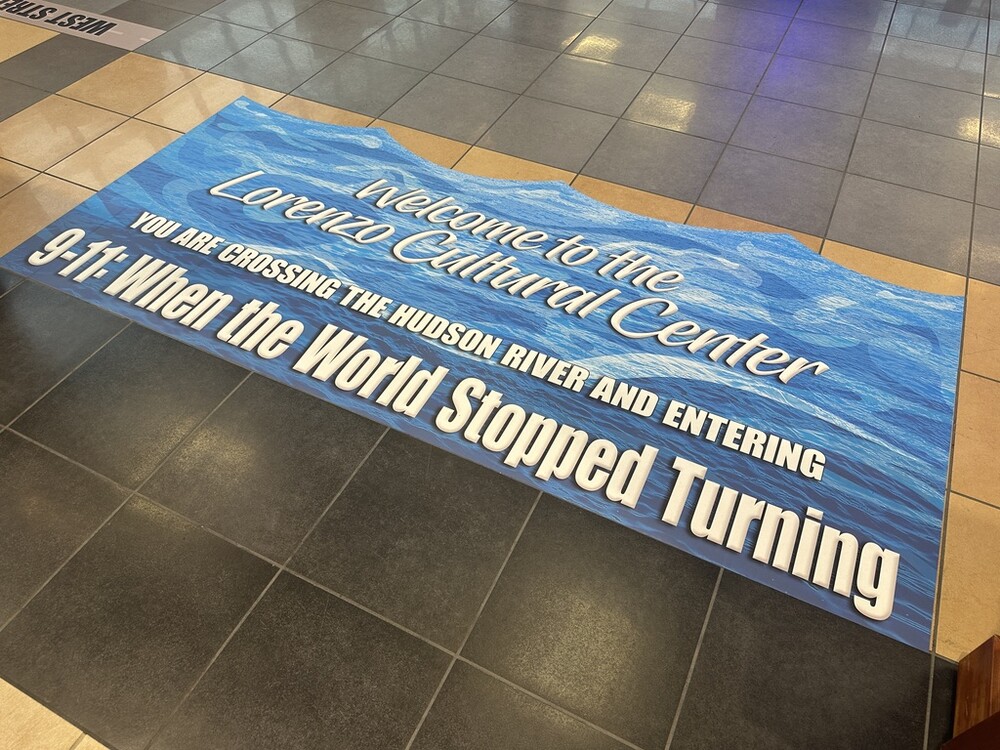
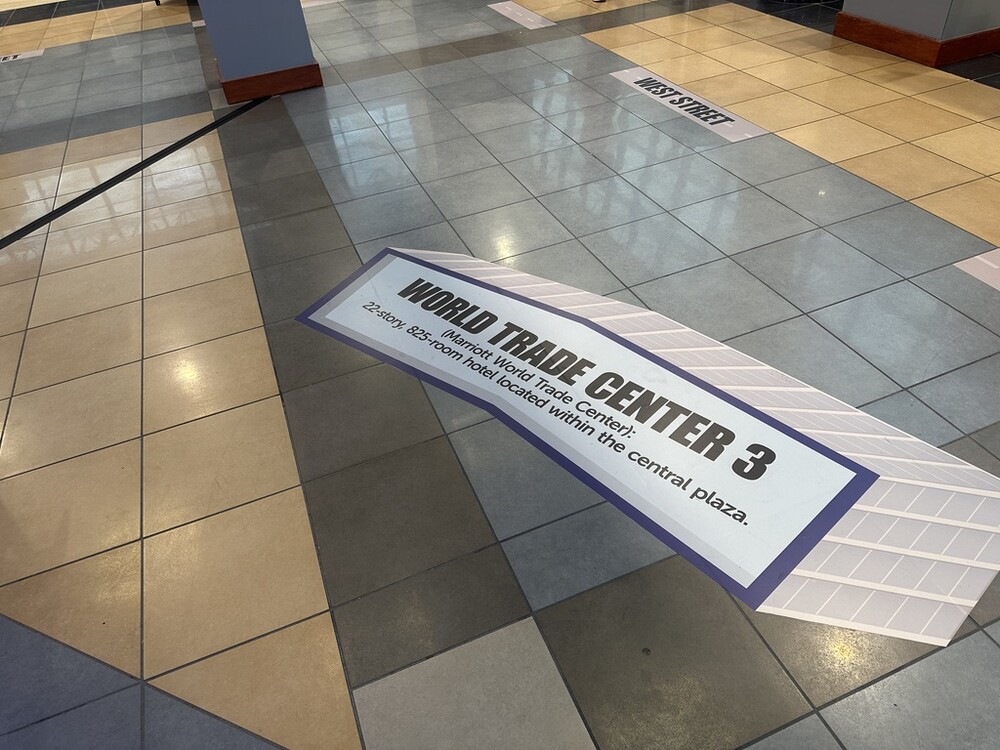
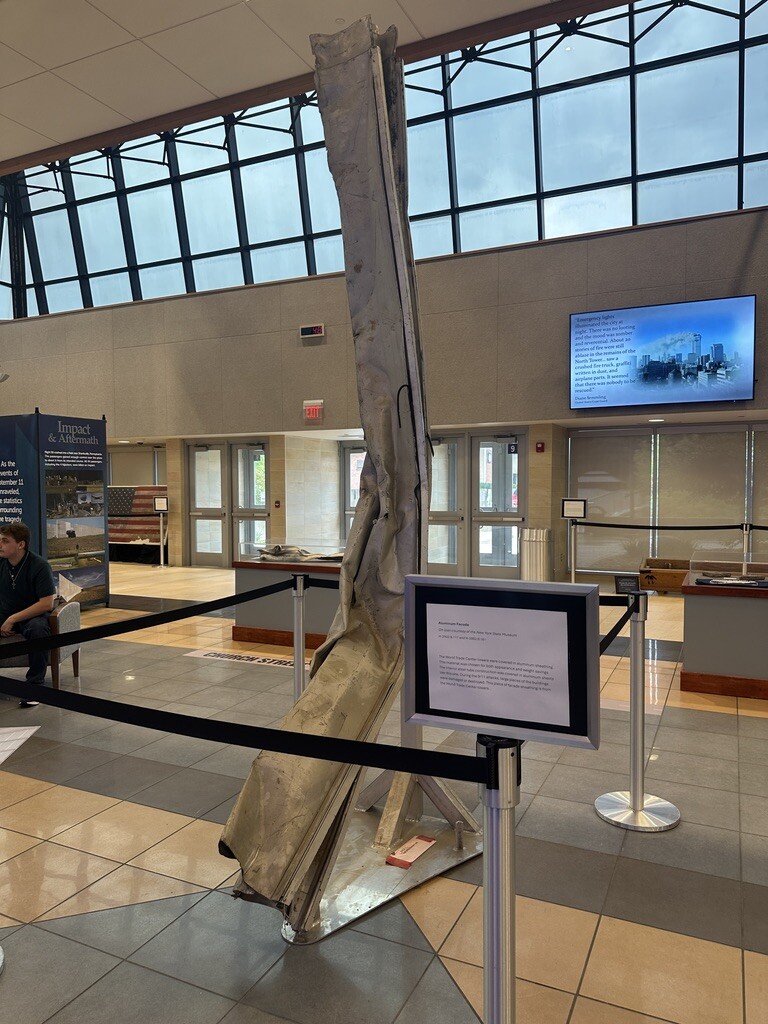
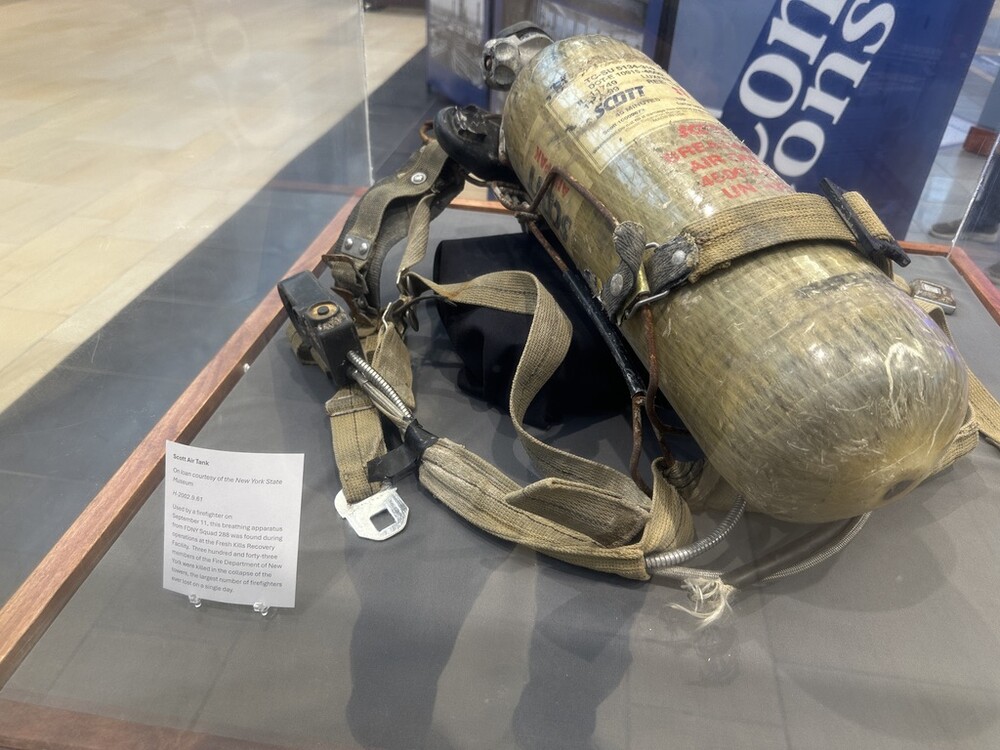
On a rainy lunch break earlier this week, I went over to Macomb Community College to see an exhibit they put up for the anniversary. Called “9/11: When the World Stopped Turning,” the main attractions were a few artifacts borrowed from the New York State Museum, including a piece of one of the planes and a large exterior piece from one of the towers. They’re closing the exhibit tomorrow, so this post is your chance to see it.
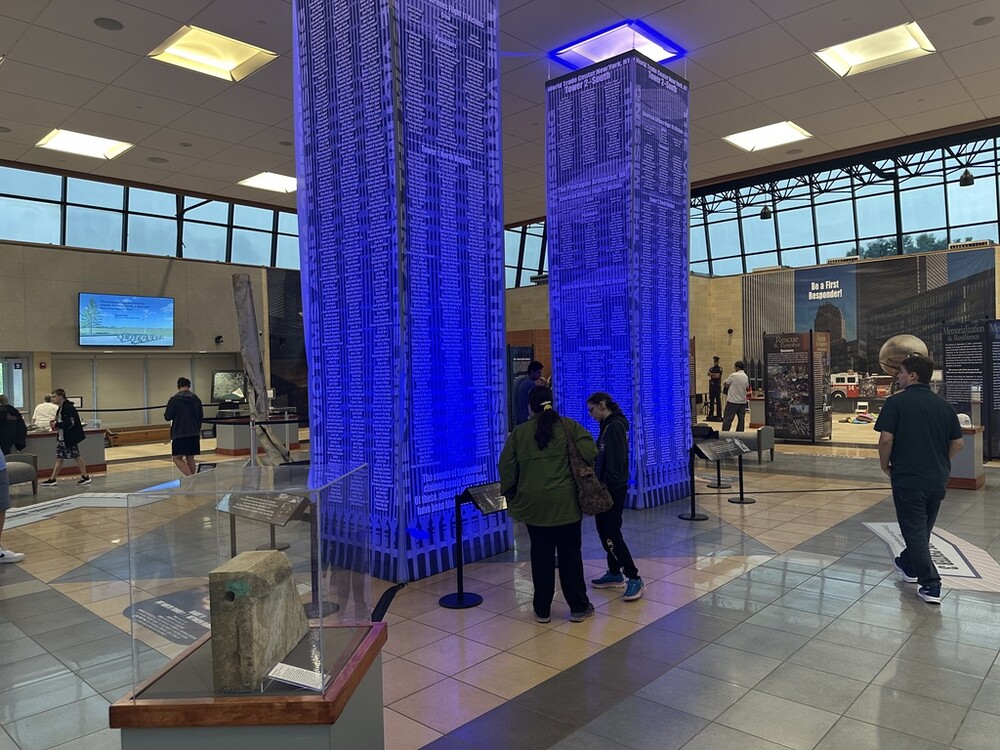
In the middle of the room there was a large mock-up of the Twin Towers with all the victims’ names written on them.
The area was dotted with four-sided columns covered with walls of text about things like the construction of the World Trade Center and Pentagon; first-person accounts from survivors and witnesses; long-term health effects; people’s “where were you” stories; pre-9/11 terrorist attacks; and how commemoration and memorialization of 9/11 and U.S. history have evolved.
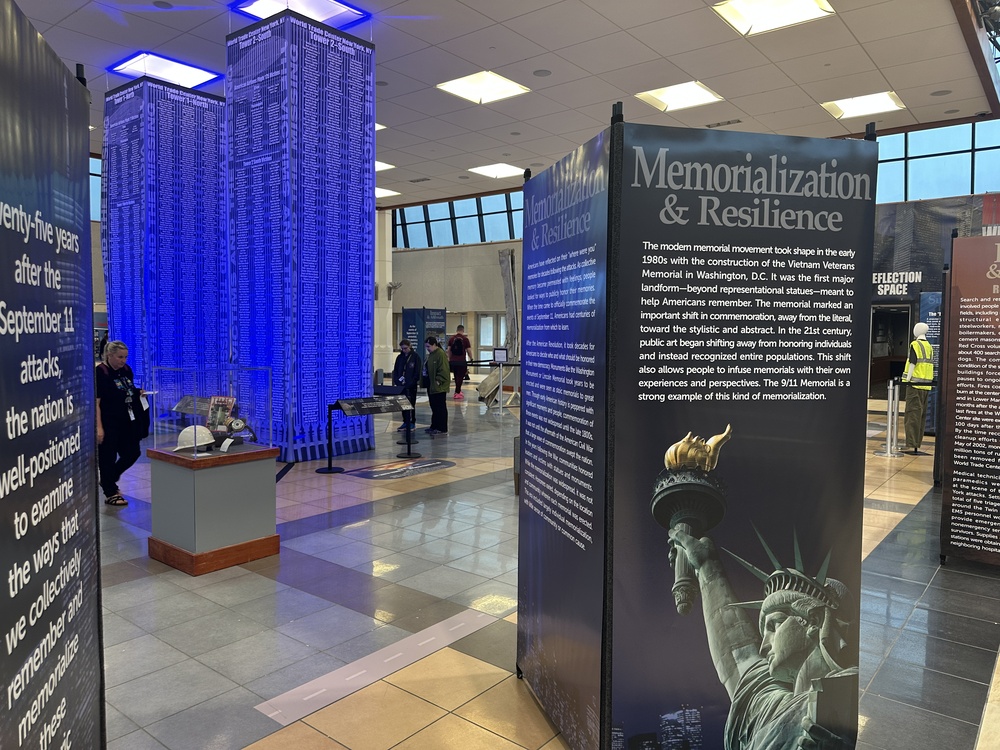
Three I learned from reading all these:
- Only 20 people were rescued from the rubble of the collapsed towers.
- The Pentagon is a pentagon due to five bordering roadways.
- The “burnt toast theory” is “a popular mental reframing tool” where you reframe inconveniences as “protection or redirection toward a more positive outcome” — such as something preventing you from being in the World Trade Center on 9/11.
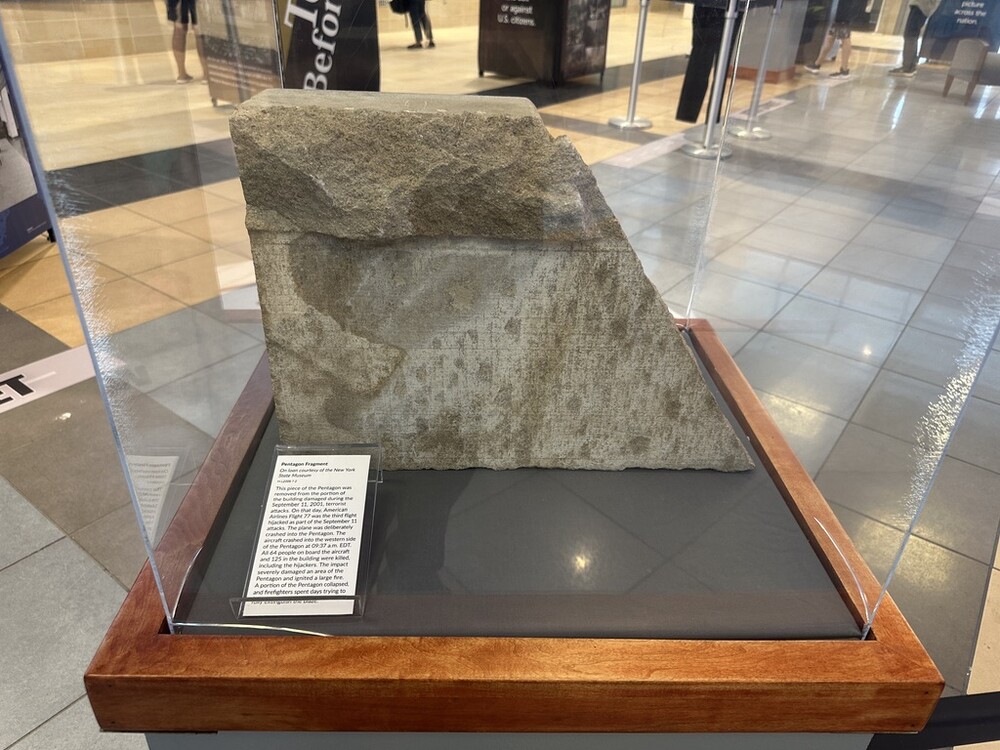
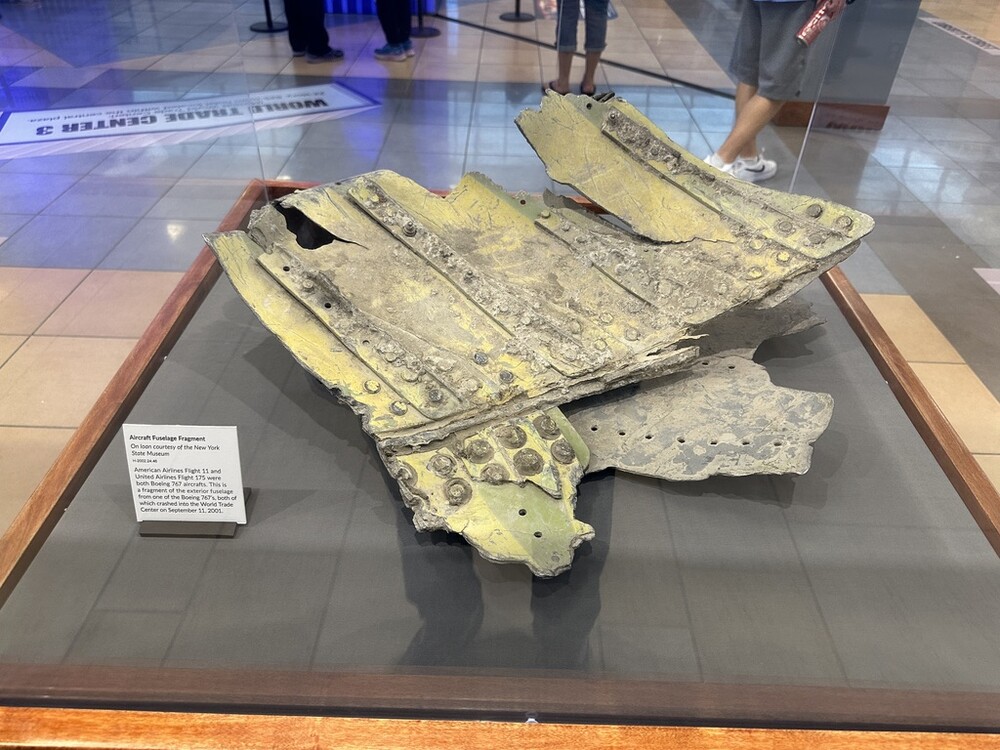
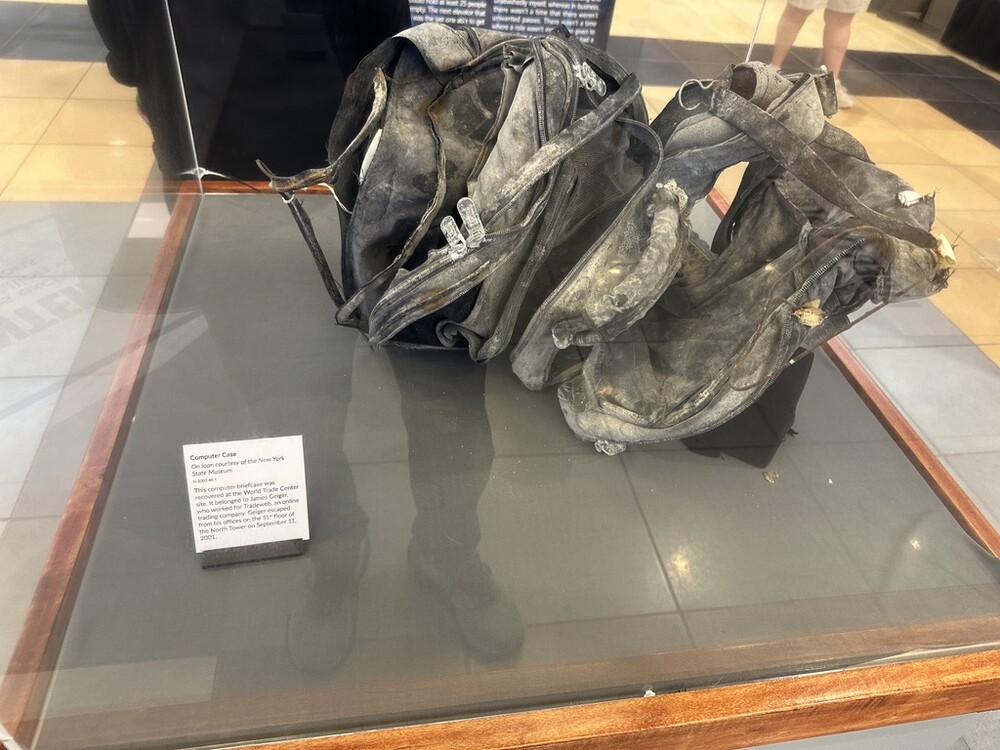
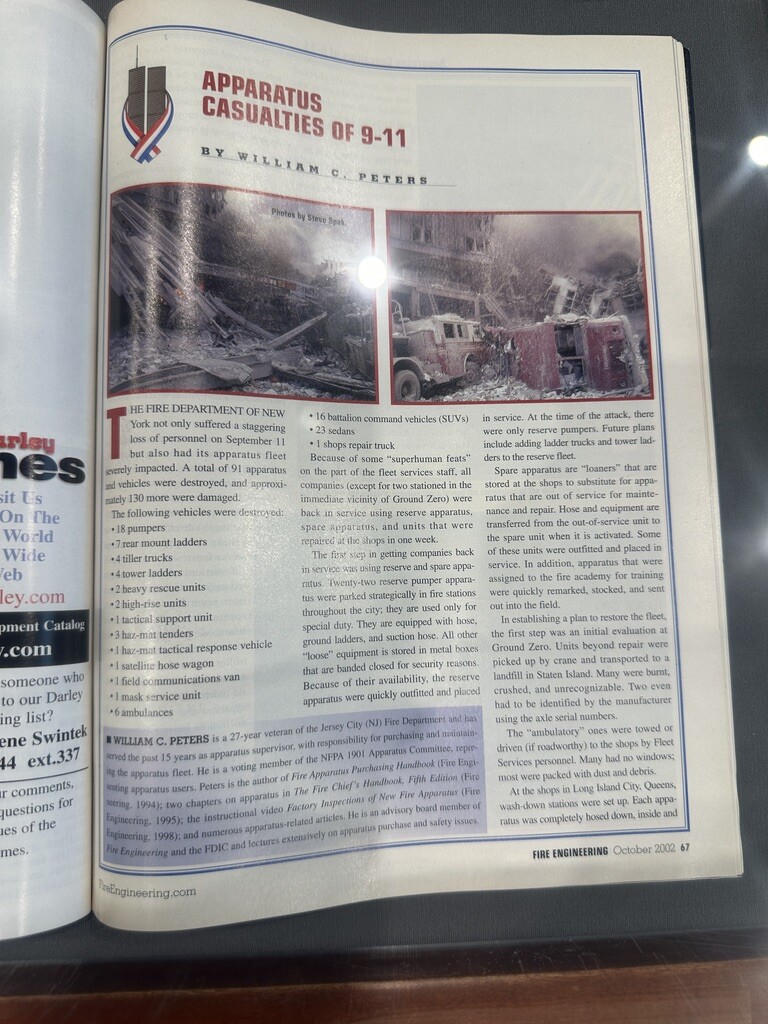
One random thing I enjoyed on display was this article from a firefighting magazine about the clean-up and recovery of the fire department’s vehicles and apparatuses. I guess when you perform the biggest firefighting vehicle clean-up effort of all time, it’s important to let your colleagues know how you did it!
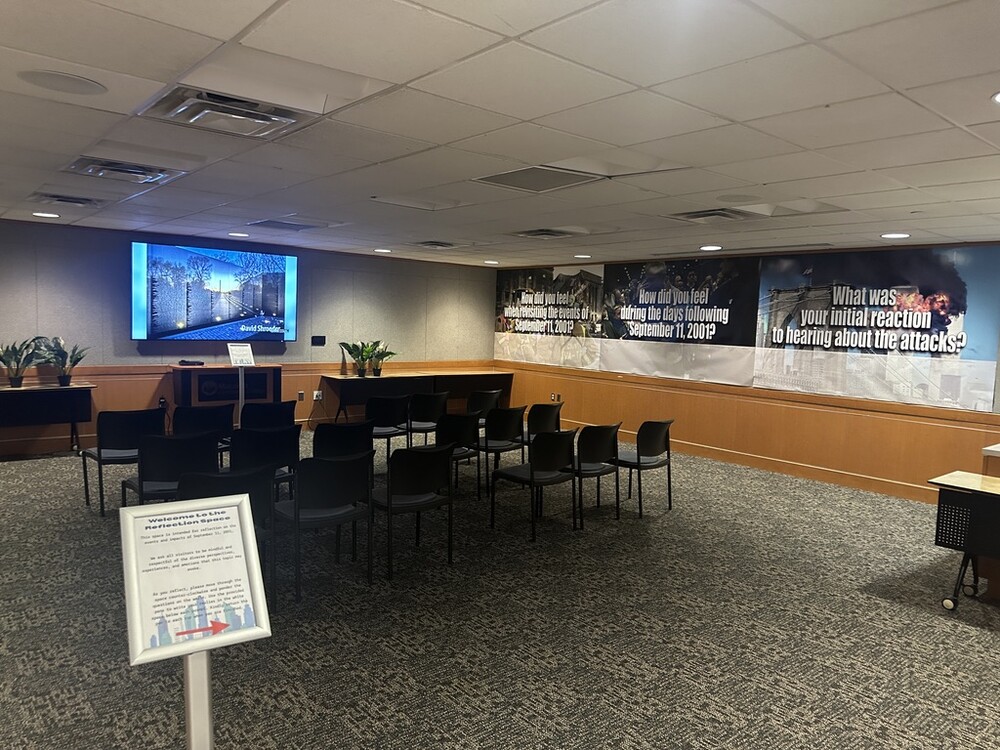
The exhibit offered a “Reflection Space,” which I found to be of questionable value for reflection.
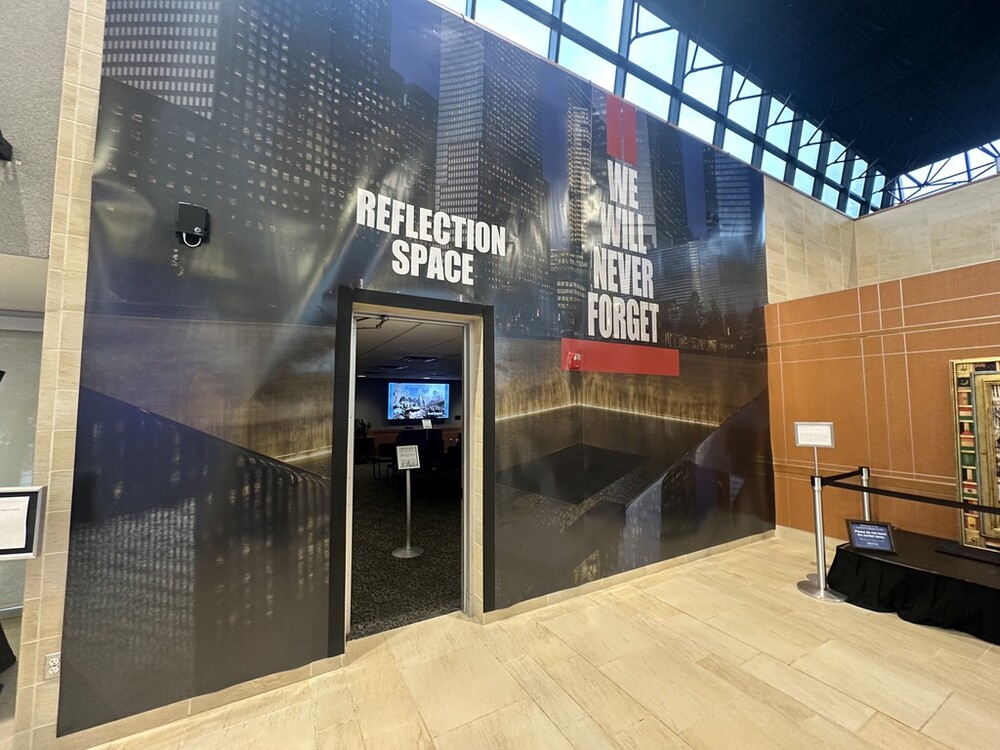
First of all, at the front of the room a TV was playing an unmuted video to distract your reflection. The room was also lined with stressful photos of things like the Twin Towers in flames, superimposed with big Impact-font questions that you were supposed to write answers to underneath. I noticed no one had answered them. When I walked in the door, a sign asked me to “move through the space counter-clockwise"; I turned around and left immediately.
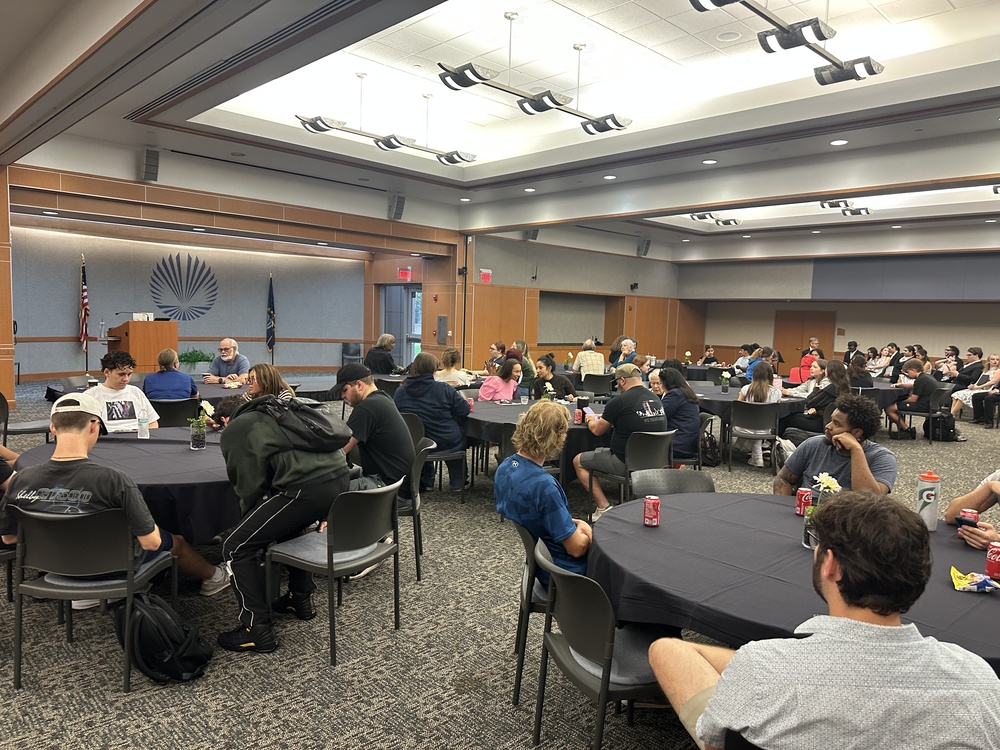
The exhibit ran in conjunction with a series of talks and documentary showings at the college leading up to the 25th anniversary. I unknowingly arrived at the exhibit just as one of these was about to begin: a talk called “Balancing Civil Liberties & National Security in Post-9/11 America.” When I entered the building, greeters were sure that’s what I’d come to see, and I was a bit confused, but I got interested when they said there were snacks. Sure enough, I found a table loaded with Coca-Cola, bags of chips and coffee dispensers. While my coffee cooled, I recorded an introductory song from the college’s singing group, the Macombers. The sign outside the door said they would sing “The Rising,” presumably the post-9/11 Bruce Springsteen song, but they ended up singing a more staid tune called “Who Are The Brave?”
There were several full tables of people there to watch this, though I suspect many were incentivized, because they asked me at the door if I was a student attending for extra credit.
Comments
Leave a comment