On the way back from West Virginia, we stayed a night in Logan, Ohio, and checked out Hocking Hills State Park.
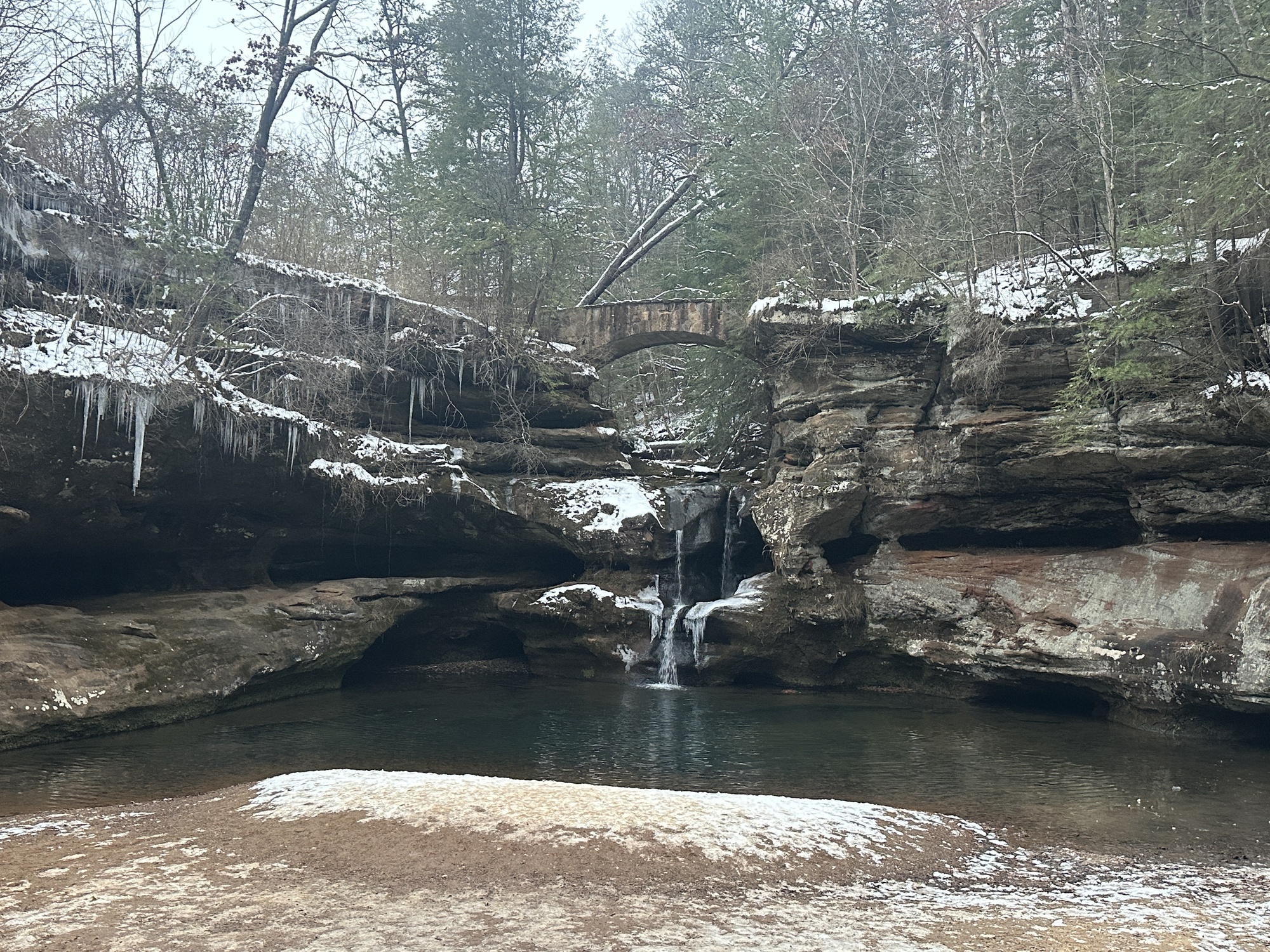
The stop felt almost obligatory. People have been telling us we need to go to Hocking Hills for a few years now. It’s definitely on the upswing: they built a huge new visitor center in 2019, had a nice Covid bump and have been reported to be growing in popularity faster than almost any other state park in the country.
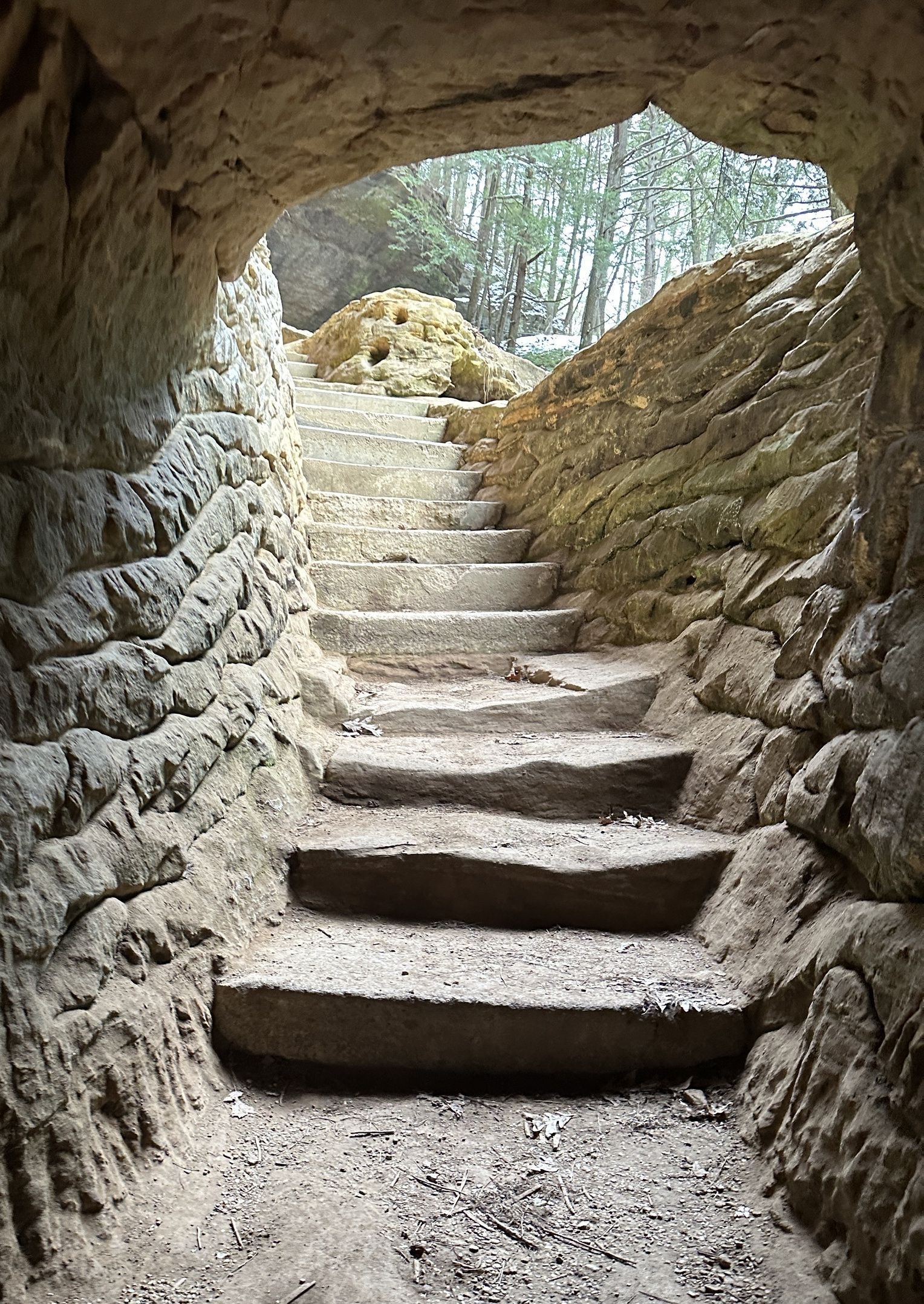
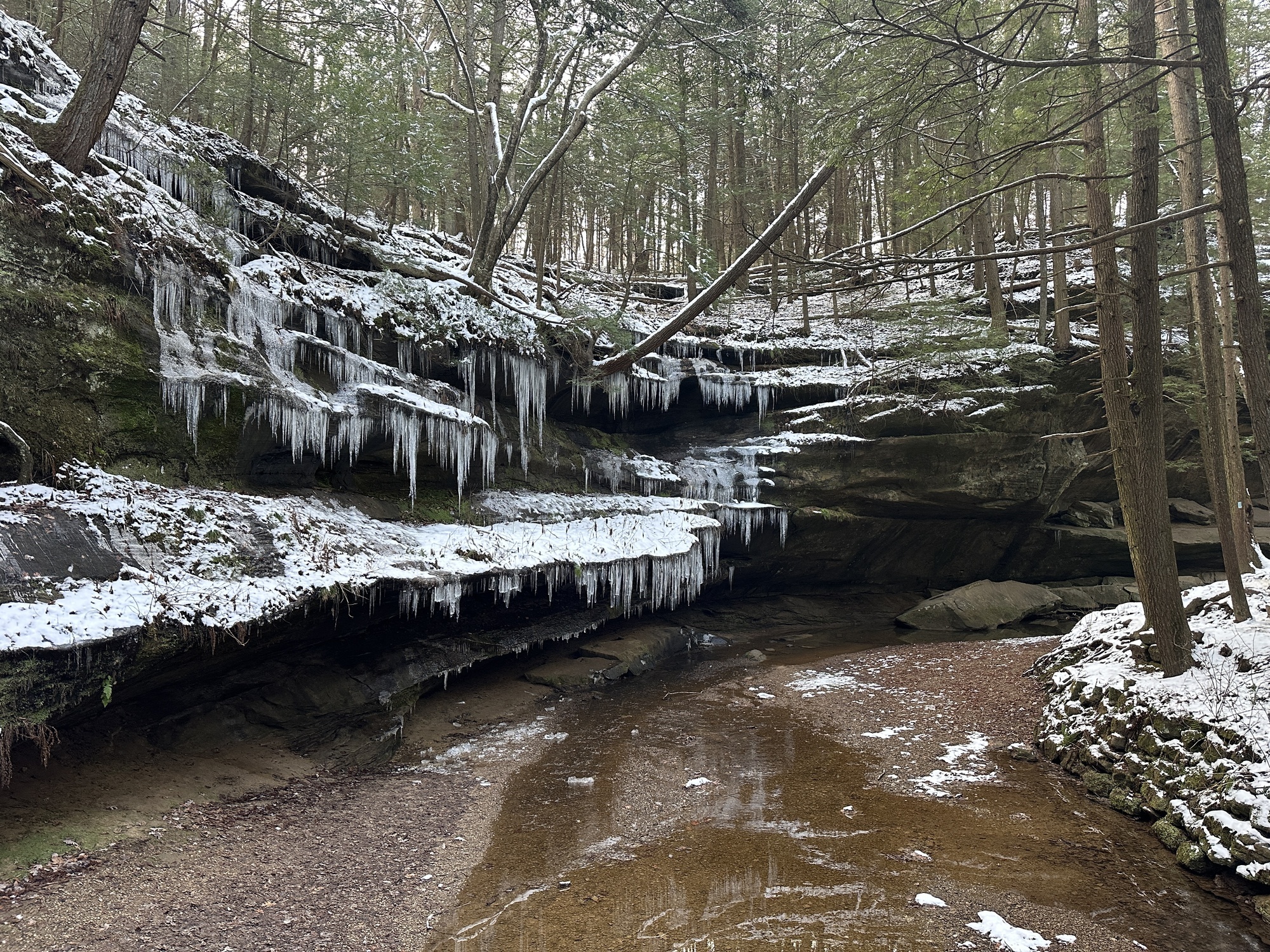
All for good reason. These were very good hikes — a total of about 5.13 miles across one evening and the following morning. I loved the staircases carved into the sandstone, the caves and hollows, the “honeycombed” rock faces, chaotic piles of huge, eroded stones – and, because of the time we went, dramatic walls of icicles.
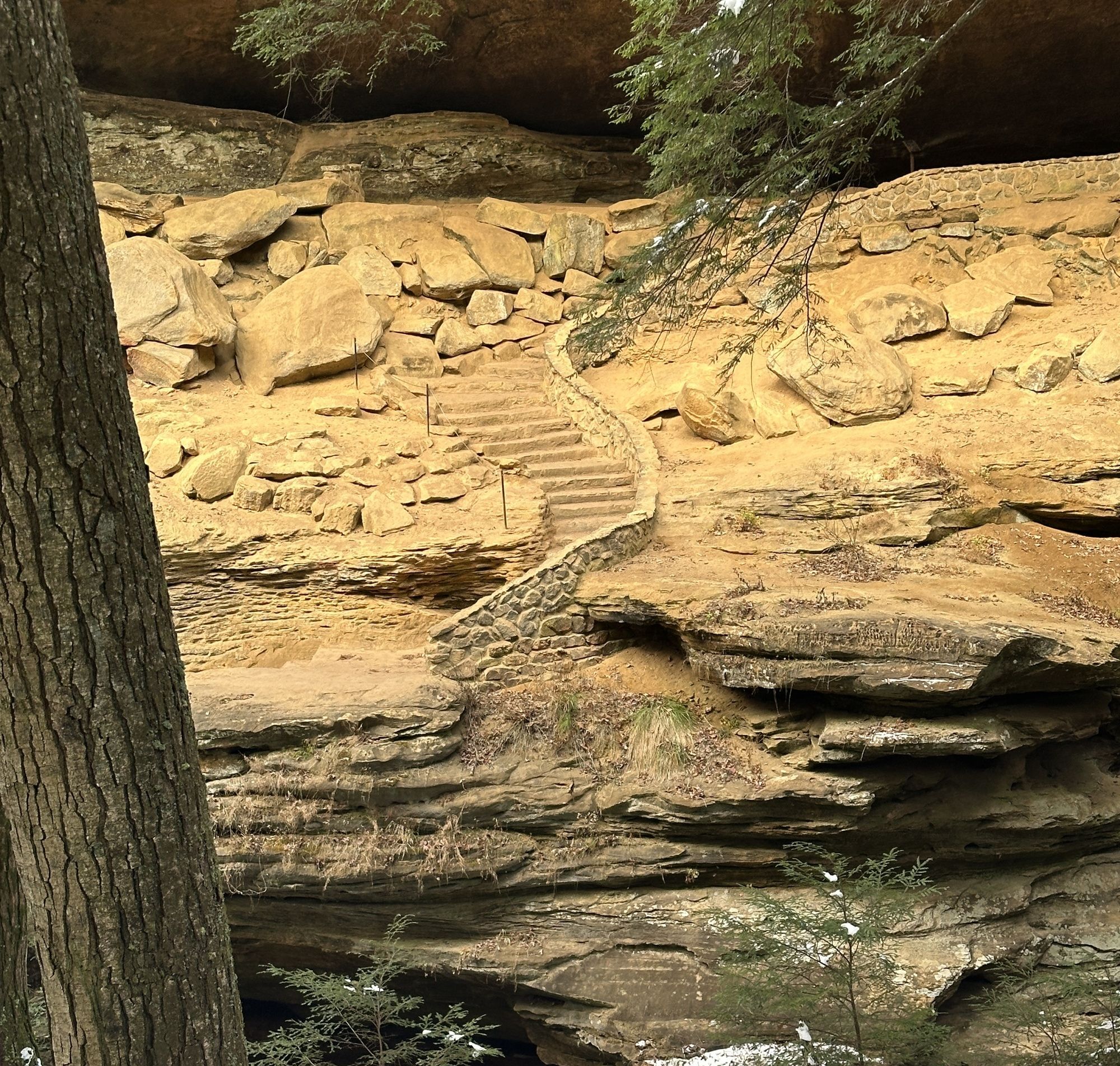
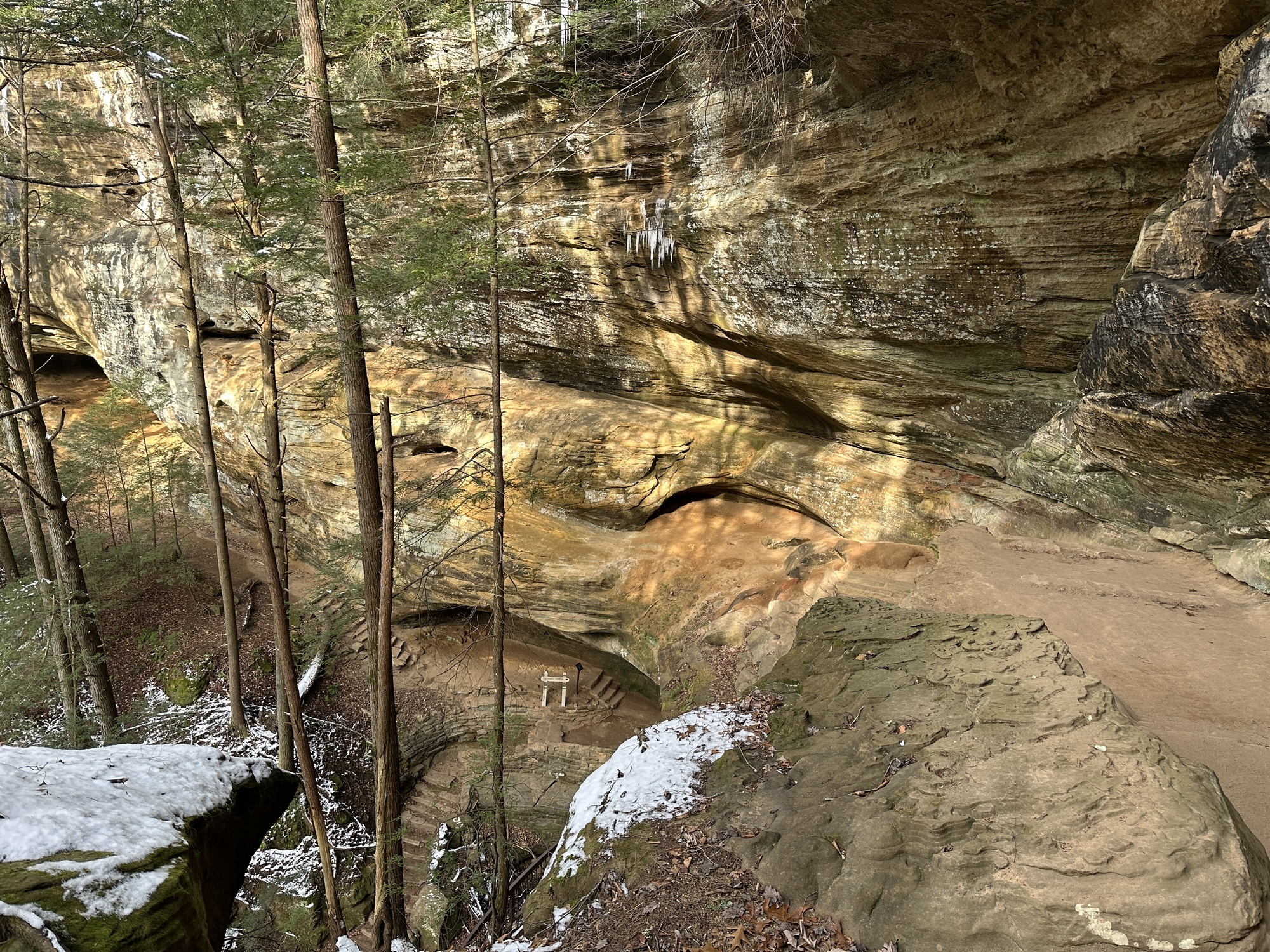
The main thing that made it cool is that the earth is very soft and sandy, and wherever there is stone, it seems to be in the midst of a thousand-year crumble. A lot of the paths and staircases are carved directly into the soft sandstone and integrate pleasingly with their surroundings. There was a definite sense of artistry to the trails.
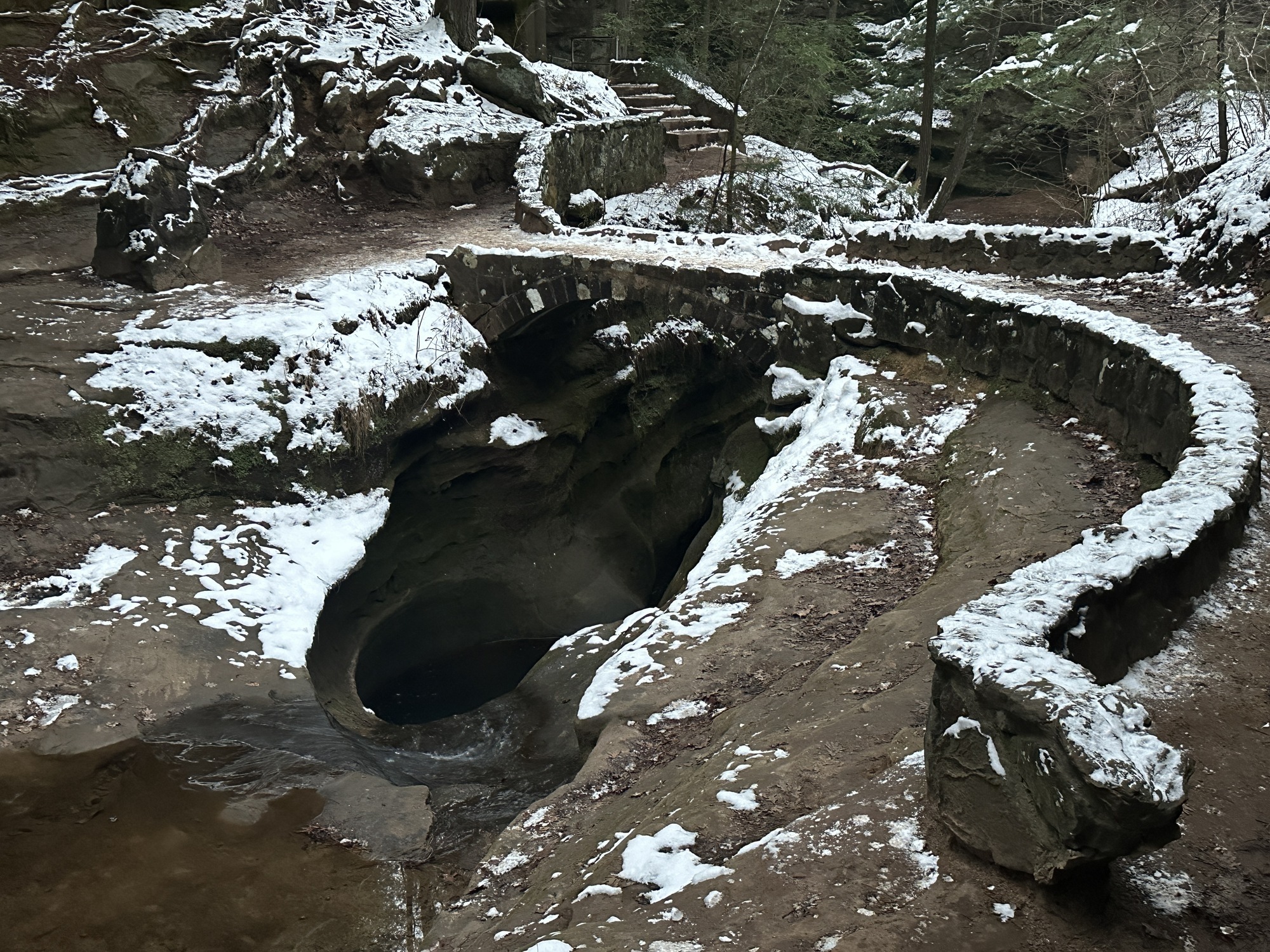
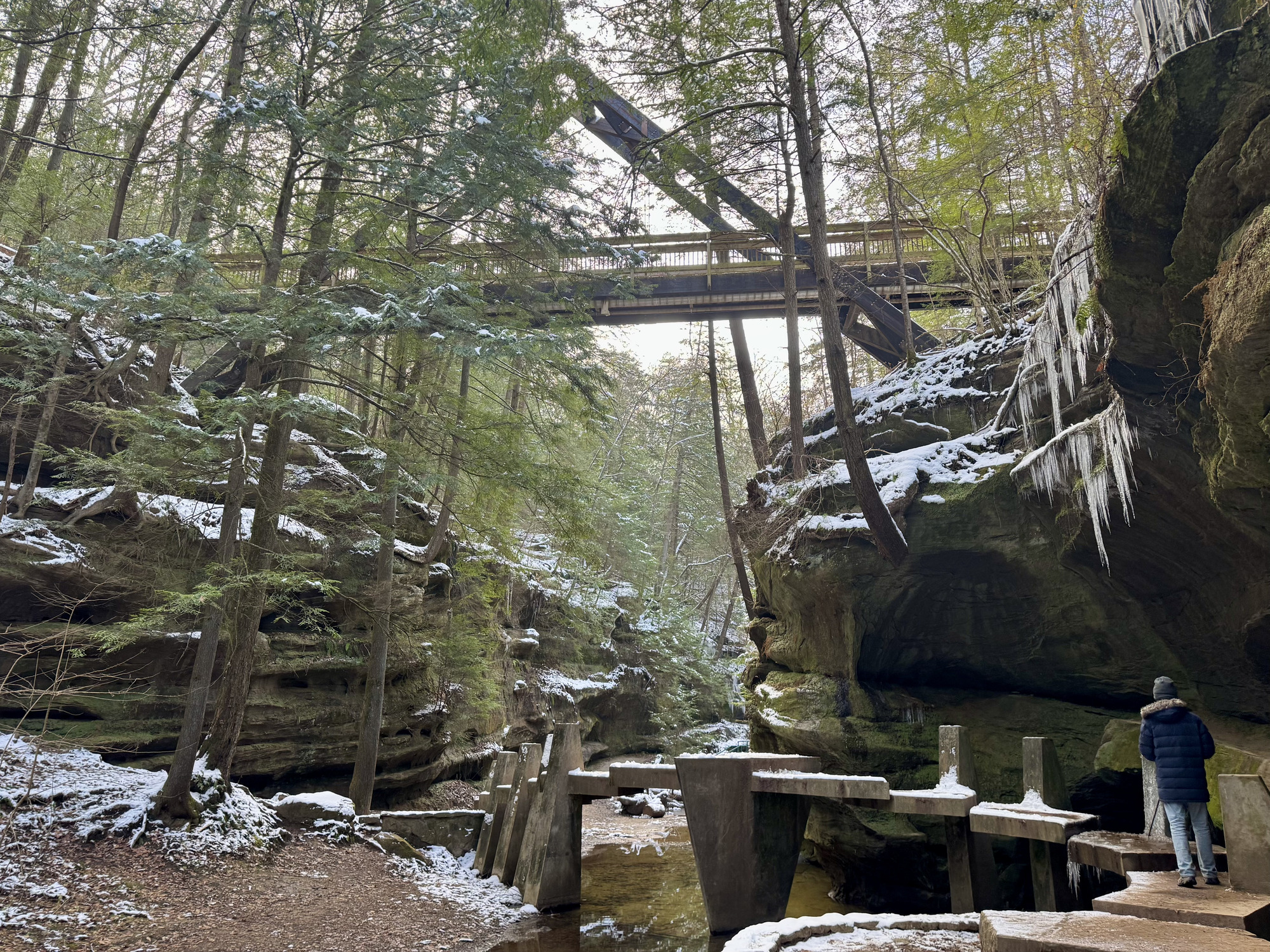
I especially liked this sort of brutalist walkway over a flowing creek.
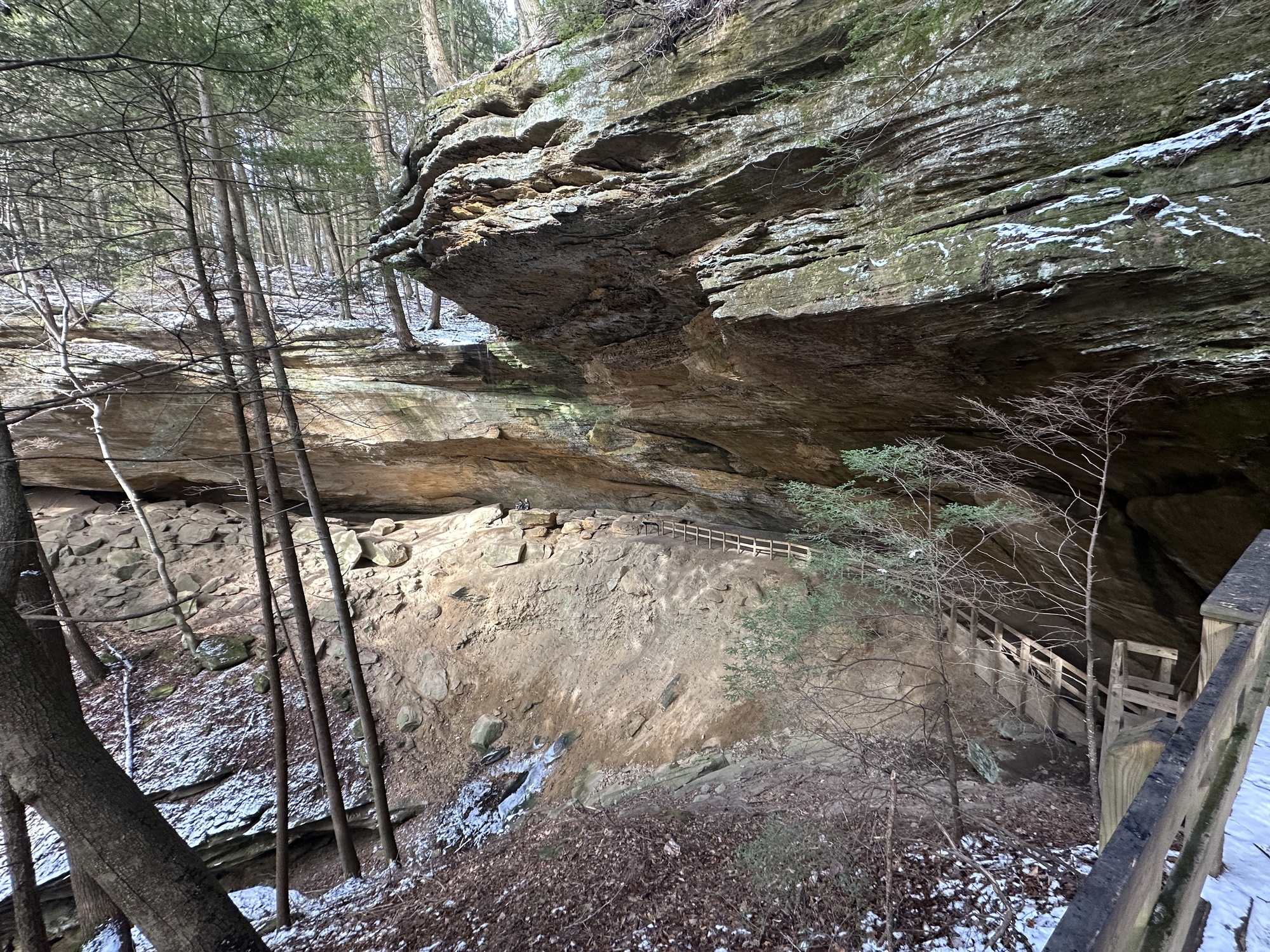
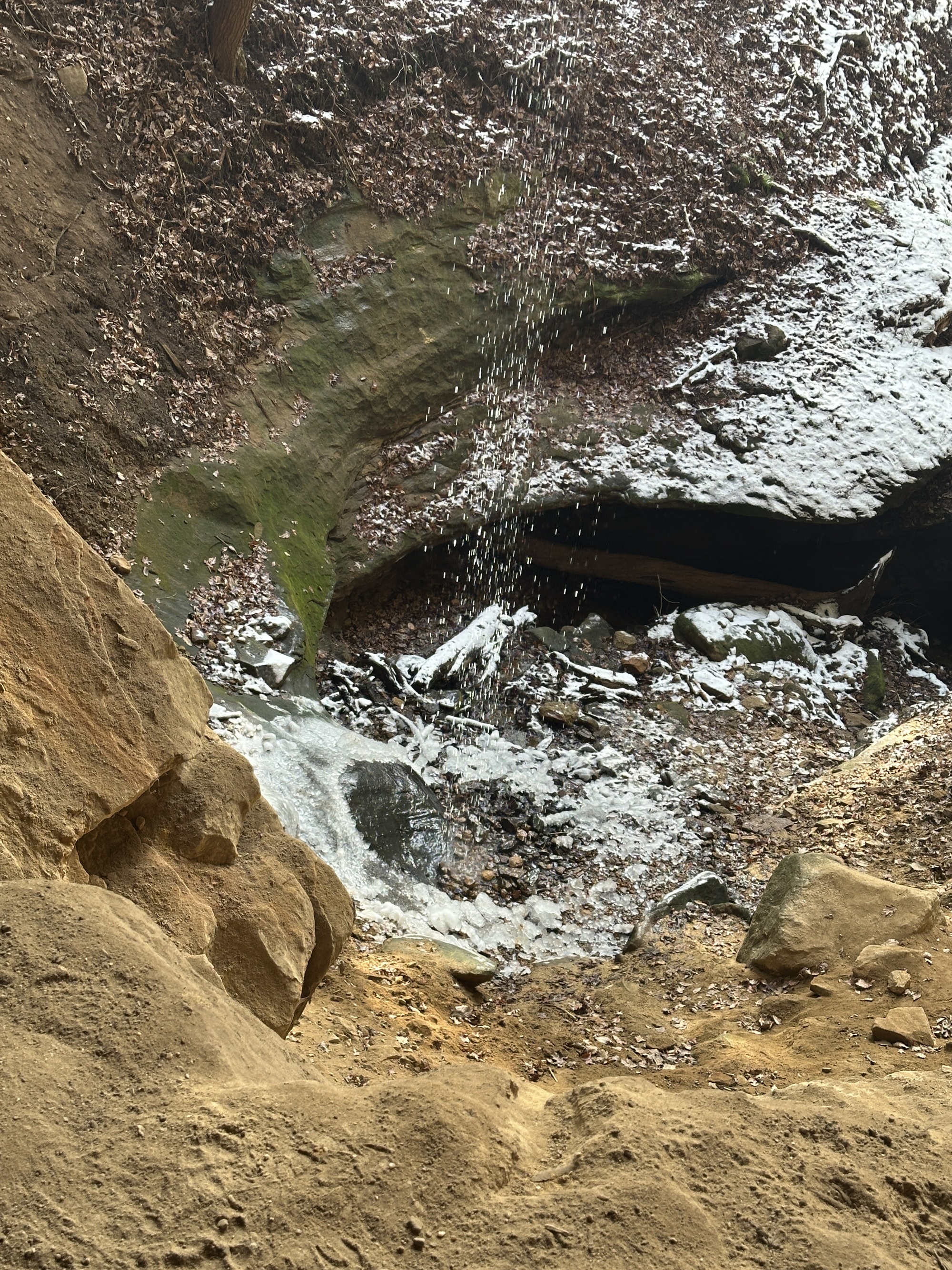
One of the nicest spots we found was called Whispering Cave. If you squint at the picture below, you can see Camilla perched on a ledge where we sat for 10 or 15 minutes watching water drip from the rock overhang above us, each drop doing its part to gradually deepen a pit in the sandstone below.
We did these hikes in early December, and the trails were pretty icy. It definitely called for careful footwork. Bridges were covered with icy snow, some rocks were slick, and there was one awkward moment where I couldn’t take one step up a very slight incline without slipping back down. But thanks to our hiking poles, this was all surmountable.
These hikes were probably better than the hikes we’d done over the previous few days at New River Gorge National Park in West Virginia. Those hikes had the good rolling Appalachian views, but at Hocking Hills the trails themselves were more charming, and I probably gasped and muttered “oh my God” at majestic things more often.
Fun with geology
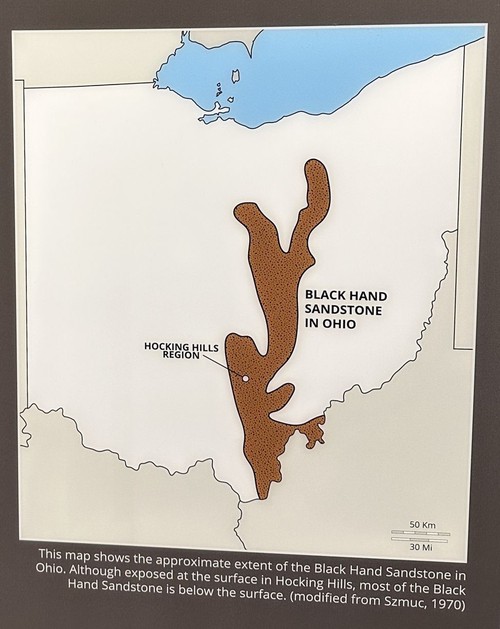
Hocking Hills is situated in a large deposit of black hand sandstone. It’s a mixture of sand and gravel from the Appalachian Mountains that rivers carried into Ohio around 350 million years ago, according to one sign. It’s largely the easy erosion of black hand sandstone that makes the park so interesting to look at and traverse.
Another geological feature on display was honeycomb weathering, as shown by the numerous small pits dotting the rock wall pictured below.
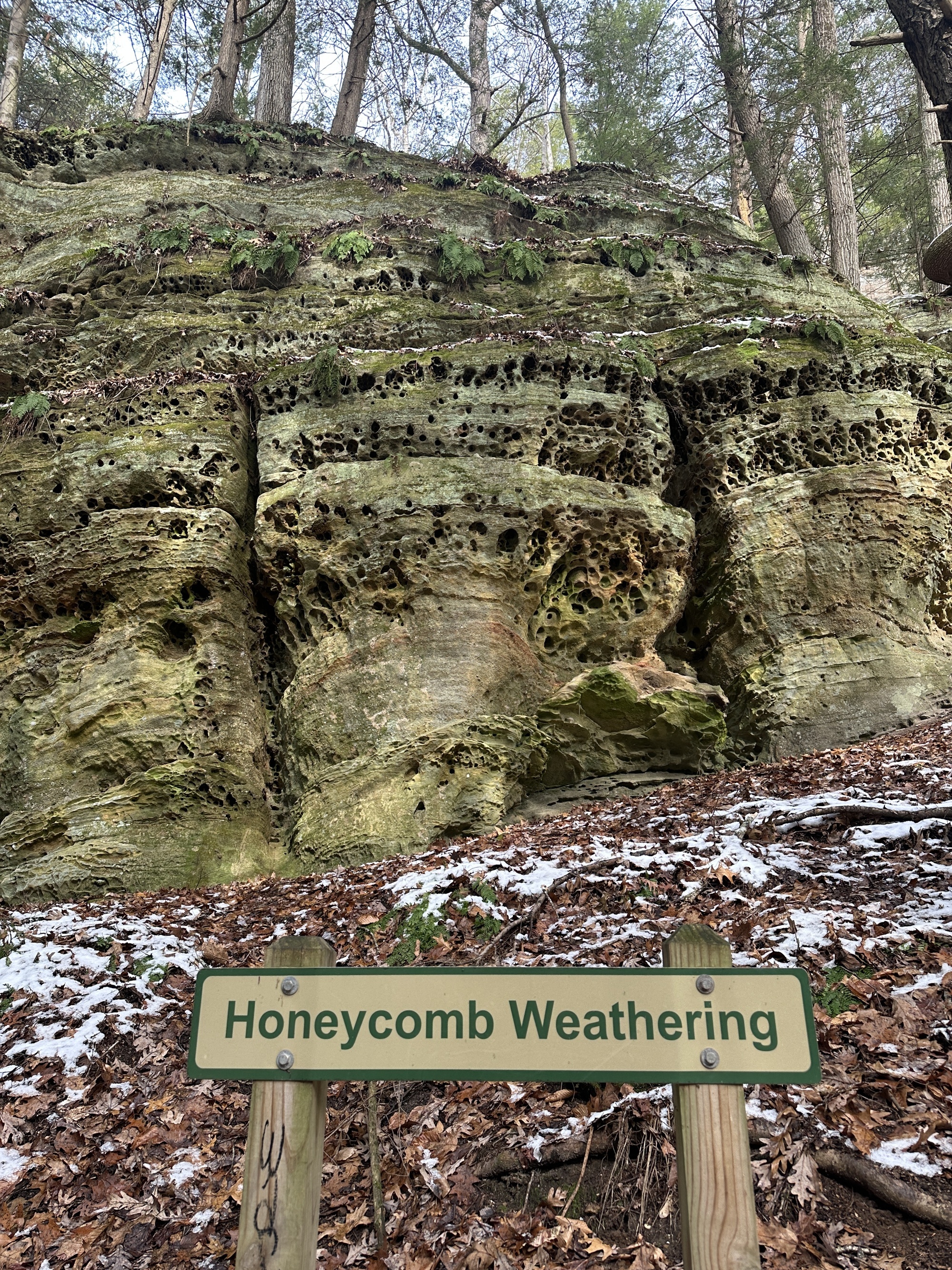
According to one of the signs, this is a result of water flowing through the porous sandstone, eroding the sand grains and leaving behind pits of residual iron and silica.
In the winter, these stone cups can “leak” ice formations, while in the spring and summer, they become a haven for a variety of small creatures as well as delicate flowers, ferns and mosses. However, use caution and never reach into these delicate rock formations as they can be easily damaged and might be home to one of our native residents.
The mystery of the Old Man
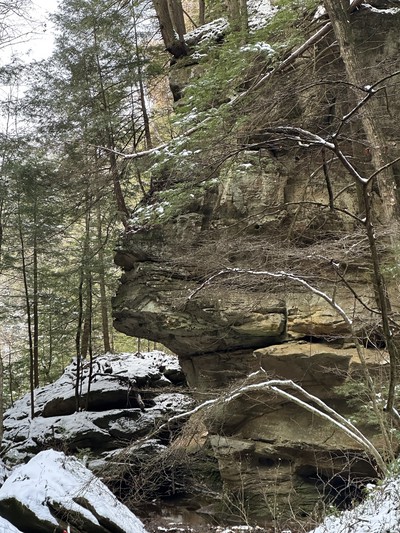
One of the main points of interest at Hocking Hills is called Old Man’s Cave. I don’t honestly remember much of what Old Man’s Cave was — I know we went there, because I have the pictures, but it looks about the same as the rest of my Hocking Hills pictures. There was, at least, a so-called “Sphinx Head” of eroded sandstone overlooking the scene. It sort of looks like the face of a man looking left.
I was more interested in the conflicting accounts of the backstory of “Old Man’s Cave” given by various signs around the park.
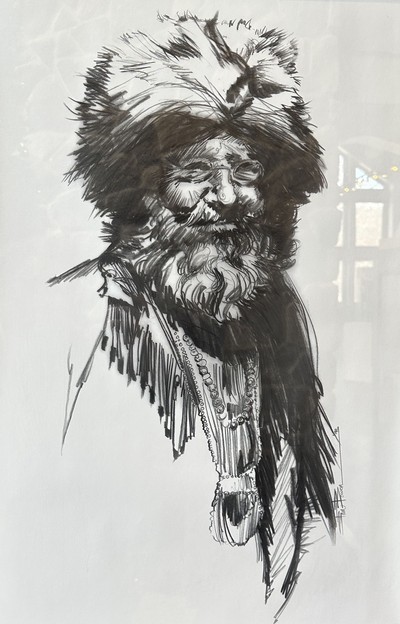
According to one of the signs — featuring a seemingly AI-generated rendition of the “Old Man” — there are two theories of who he could have been. One is that he was Richard Rowe, a trapper and hunter in the 1790s who made the cave his home, and the other is that he was Richard Retzler, a veteran of the War of 1812 rumored to have buried money in the cave. In both versions of the story, the old man dies by accidentally shooting himself while in his cave.

Elsewhere, an Ohio historical marker states definitively that the cave was “named for the ‘old man’ Richard Rowe, a recluse who made the cave his home in the 1800s” — not 1790s.
Finally, a sign inside the visitor’s center pushes the story of the reclusive trapper back to the mid-1700s. It also sheds some light on how the Old Man mythos had evolved by the 20th century into a bizarre ghost story.
In the early 1900s, sightings of the ghost of an old man and a large white dog were so common that locals explored the ground of the cave where the ghost was frequently seen. A local newspaper reported that gravesite was discovered. In the grave, a male was buried with a printed copy of the Declaration of Independence, a gun, a dog and approximately $600 of gold. The explorers returned everything to the gravesite (except the money — which was reported to be removed from the site and donated to “a benevolent institution.”)
And, twisting things further, this sign also connects back to that “Retzler” thread from earlier.
In the 1800s, it was common to find the name Rowe on maps, deeds and other official documents. This is much like today’s use of “John Doe” for an unknown person. For years, the old man has been referred to as Richard Rowe. However, some recent accounts have been uncovered that his name could have been Retzler.
At least the illustration of the Old Man at the visitor center did not appear to be AI generated.
Comments
Leave a comment