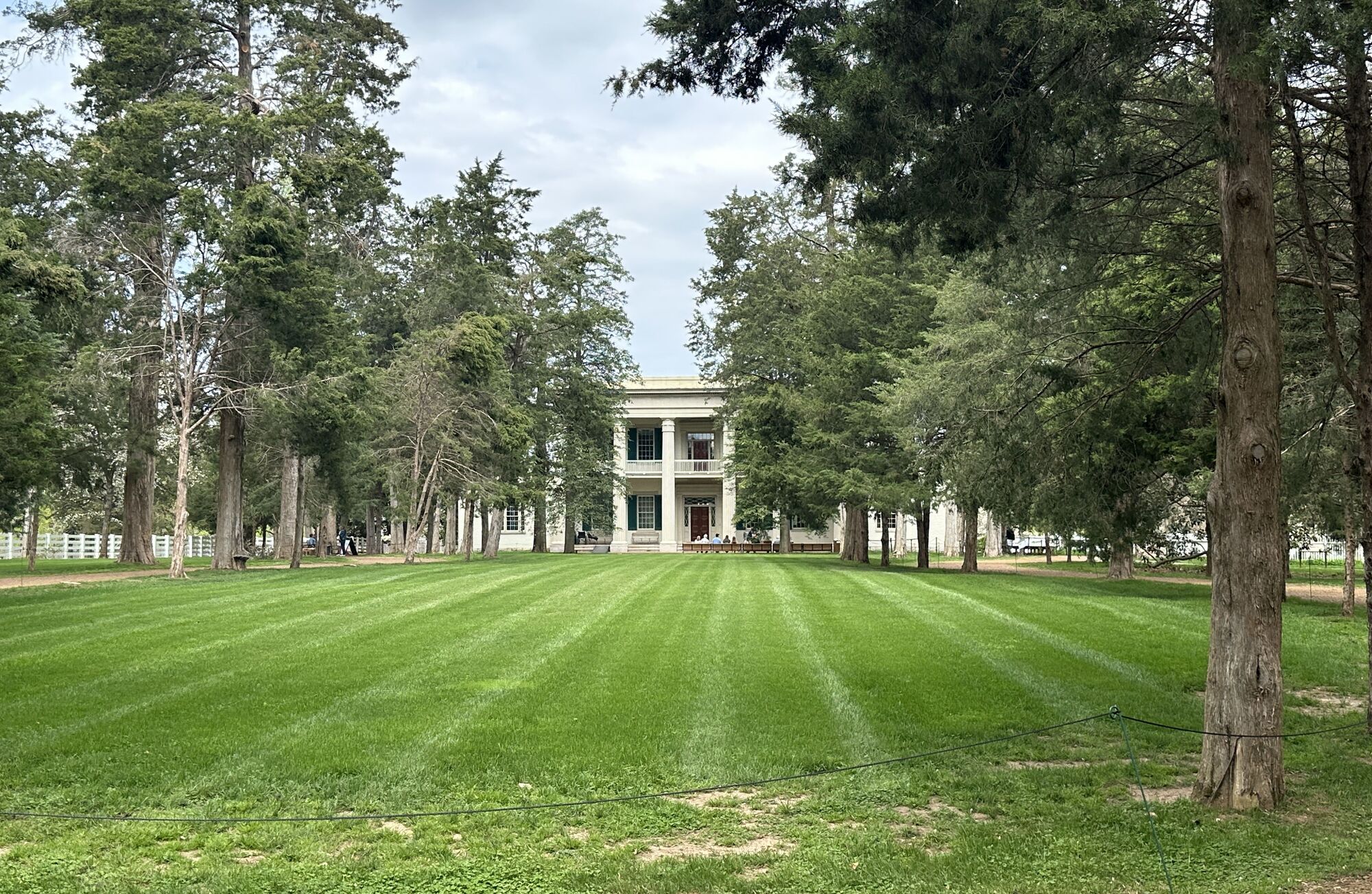
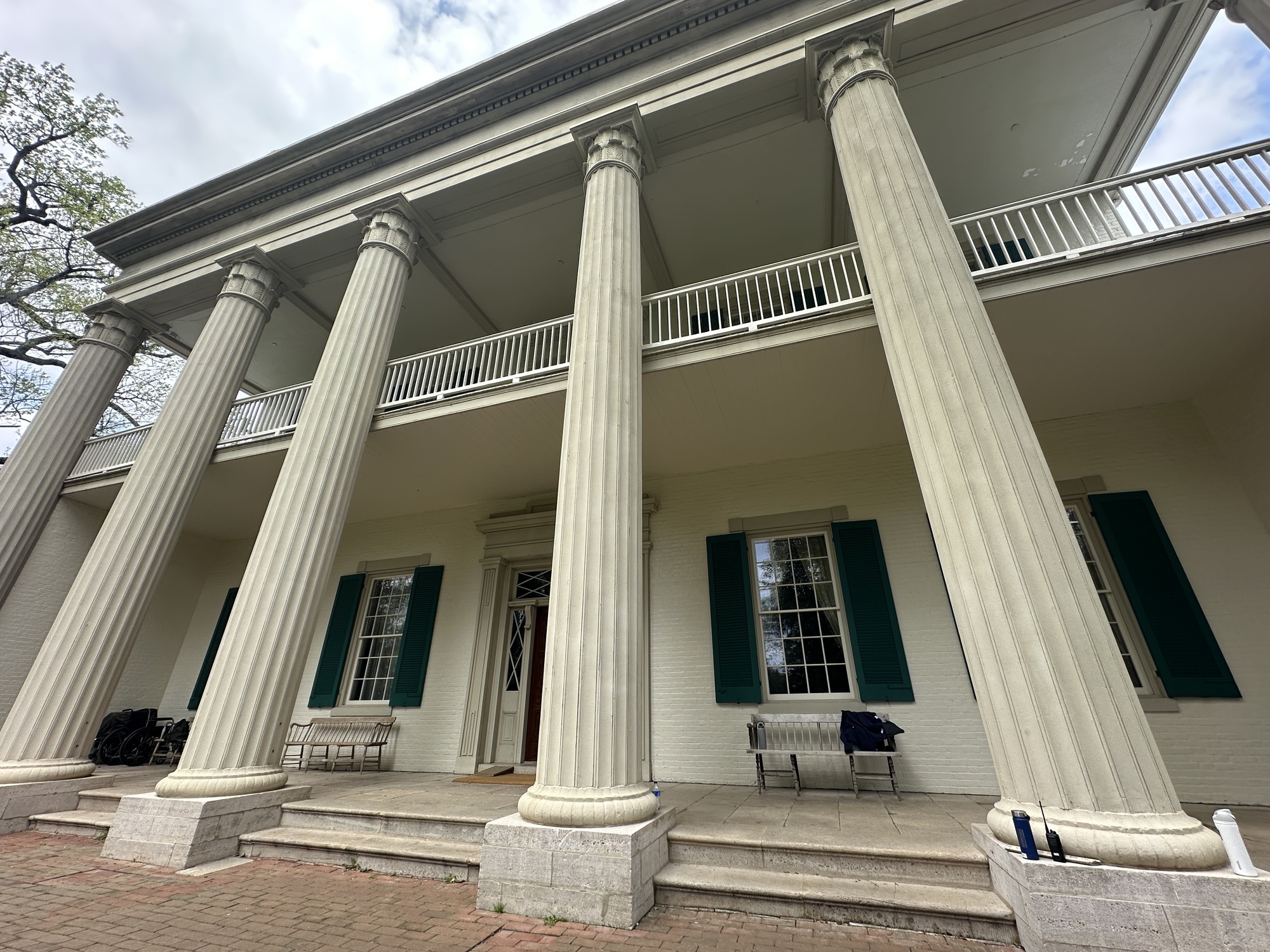
On our recent trip to Nashville, one of the things on my “must do” list was to visit The Hermitage, the cotton plantation that Andrew Jackson, the seventh president of the United States, called home. It has Jackson’s well-preserved mansion, a museum about his life and career, a bunch of open land to amble around on and a few outbuildings to peek into. The Hermitage isn’t one of the official presidential libraries and museums currently administered by the federal government, but it’s effectively Jackson’s presidential museum.
The Hermitage spans a little over 1,000 acres and is a short drive east of downtown Nashville (or, as one sign on the property put it, “a four-hour carriage ride”). We got there at noon on a cloudy March 30 and spent about three hours walking the grounds. Here are some of the highlights.
The museum
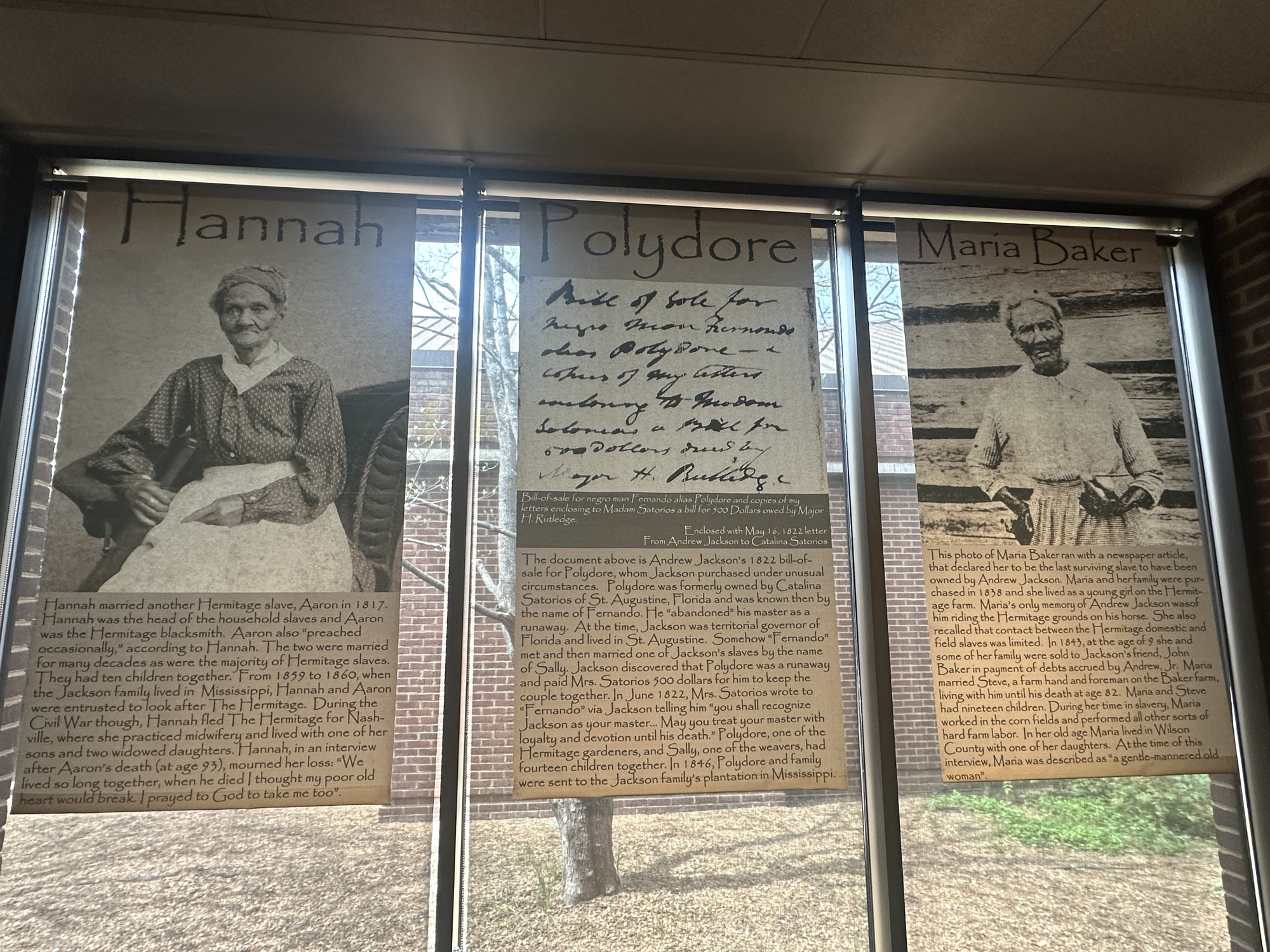
The museum opens text-heavy and fairly dry, but there are some eye-catching artifacts. You can take a slow walk down a hall, stopping to peruse walls of text that narrate Jackson’s rise from obscurity and early military adventures. Directly opposite, Papyrus is the font chosen to describe several of the more than 100 slaves Jackson kept at the Hermitage.
I don’t mean to get woke about fonts, but it strikes me as unfortunate that they chose one of the least legible fonts imaginable for the slaves, while Jackson’s story gets a clean sans serif. I don’t want to think it’s because the museum designers instinctively associated black slaves with the amateurish handwritten scrawl of Papyrus, but it seems plausible.
Not to mention the Papyrus is printed on sheets that hang in front of a window, backlit by the sun. It’s basically the least inviting reading surface you could devise.
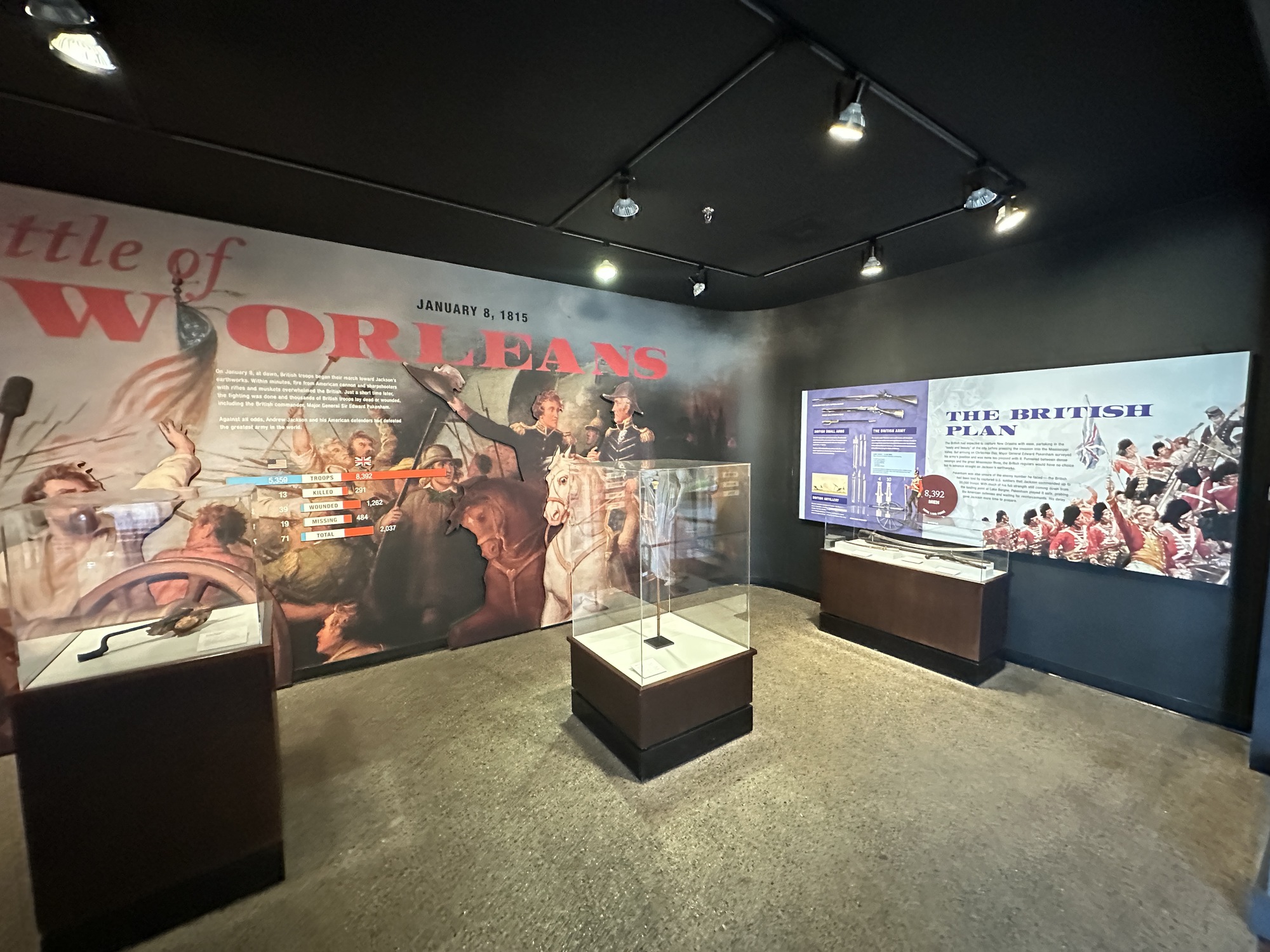
There’s a nook devoted to Jackson’s victory against the British in the Battle of New Orleans, which put him on the map as a national figure. Some of the more eye-popping things on display anywhere were commemorative items that Jackson accumulated in the heady days and years after the battle.
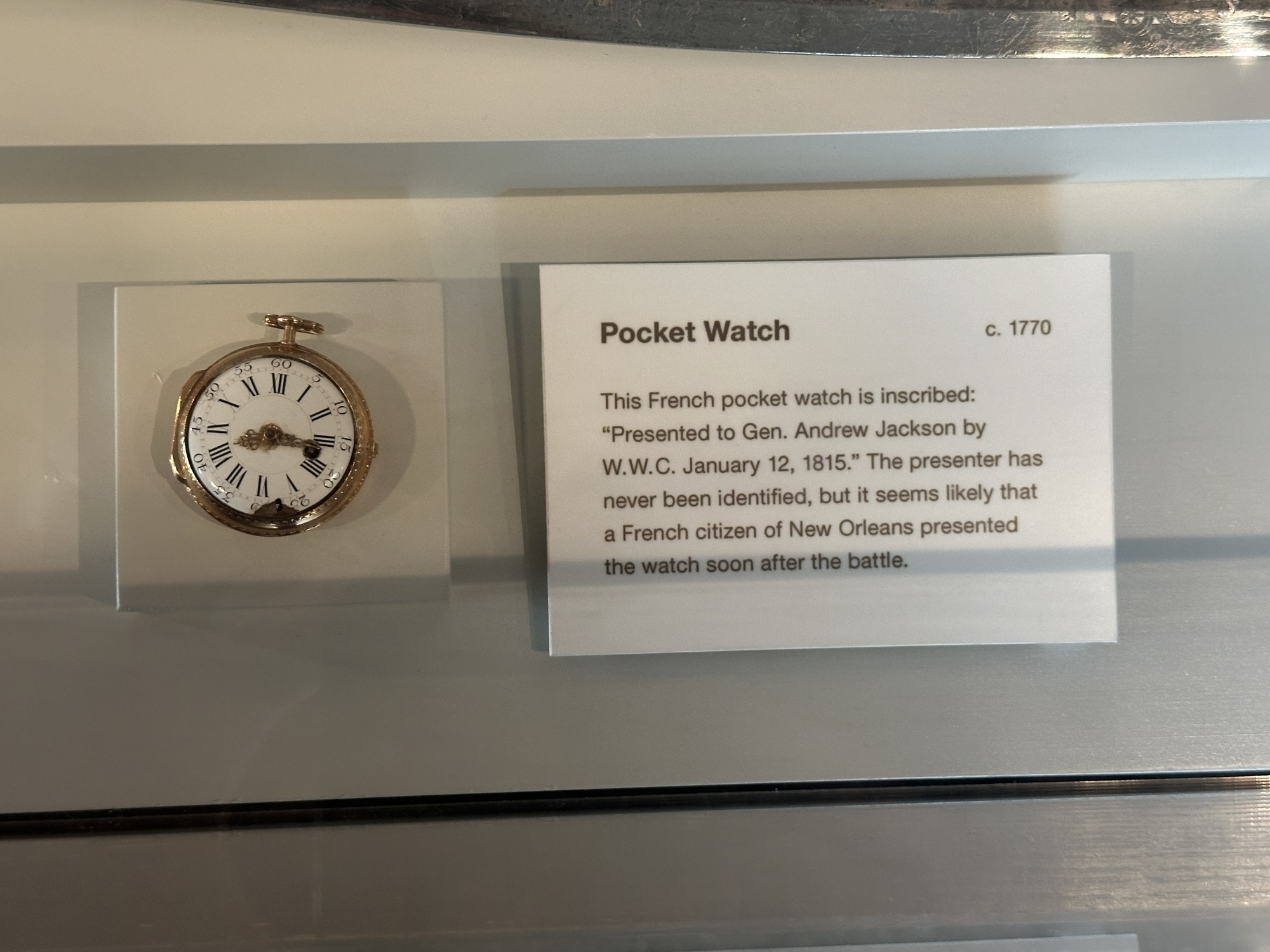
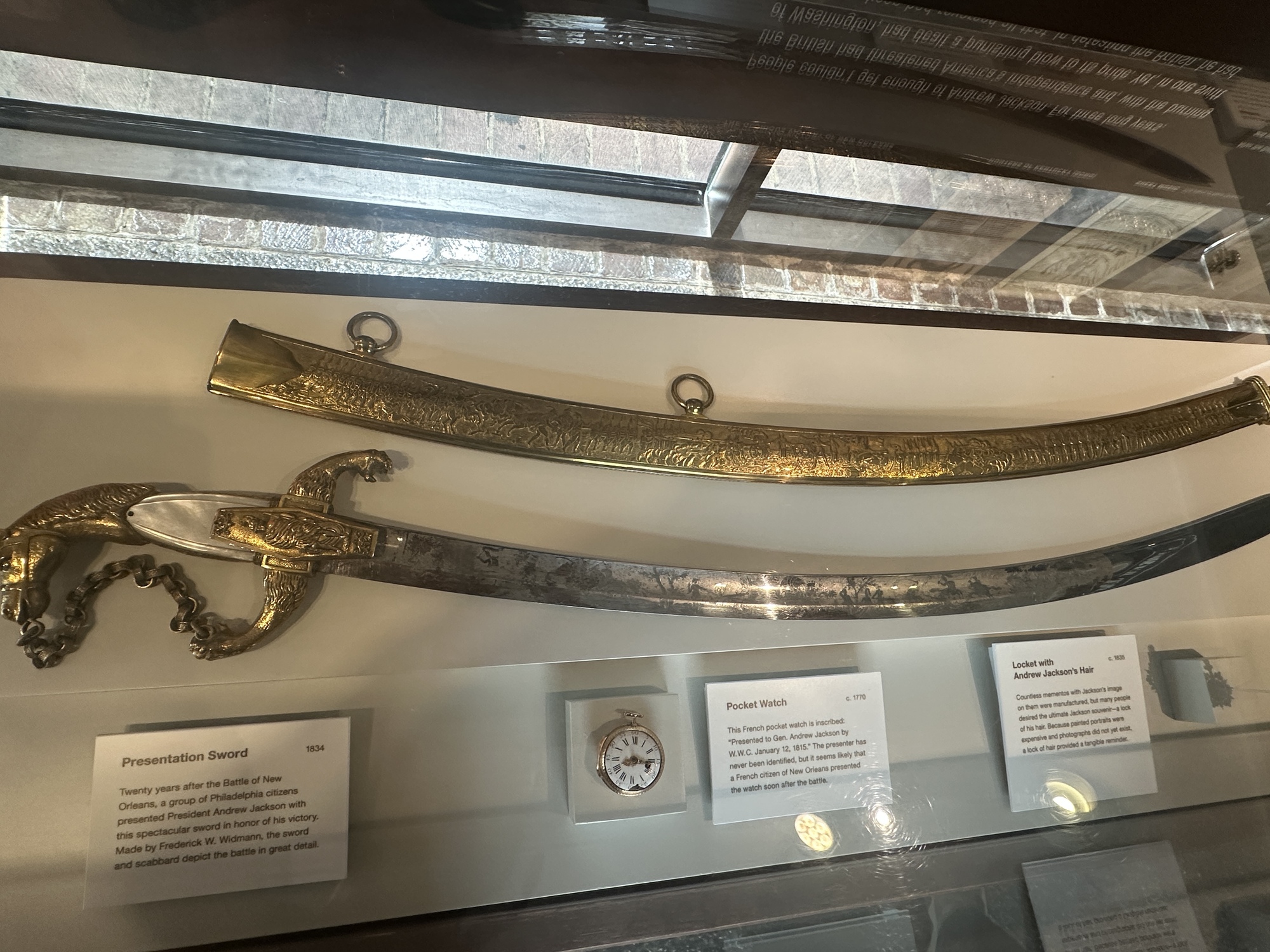
After all this stuff, I passed through a set of doors and realized I’d come to the main event — the real museum. Just look at all this text!
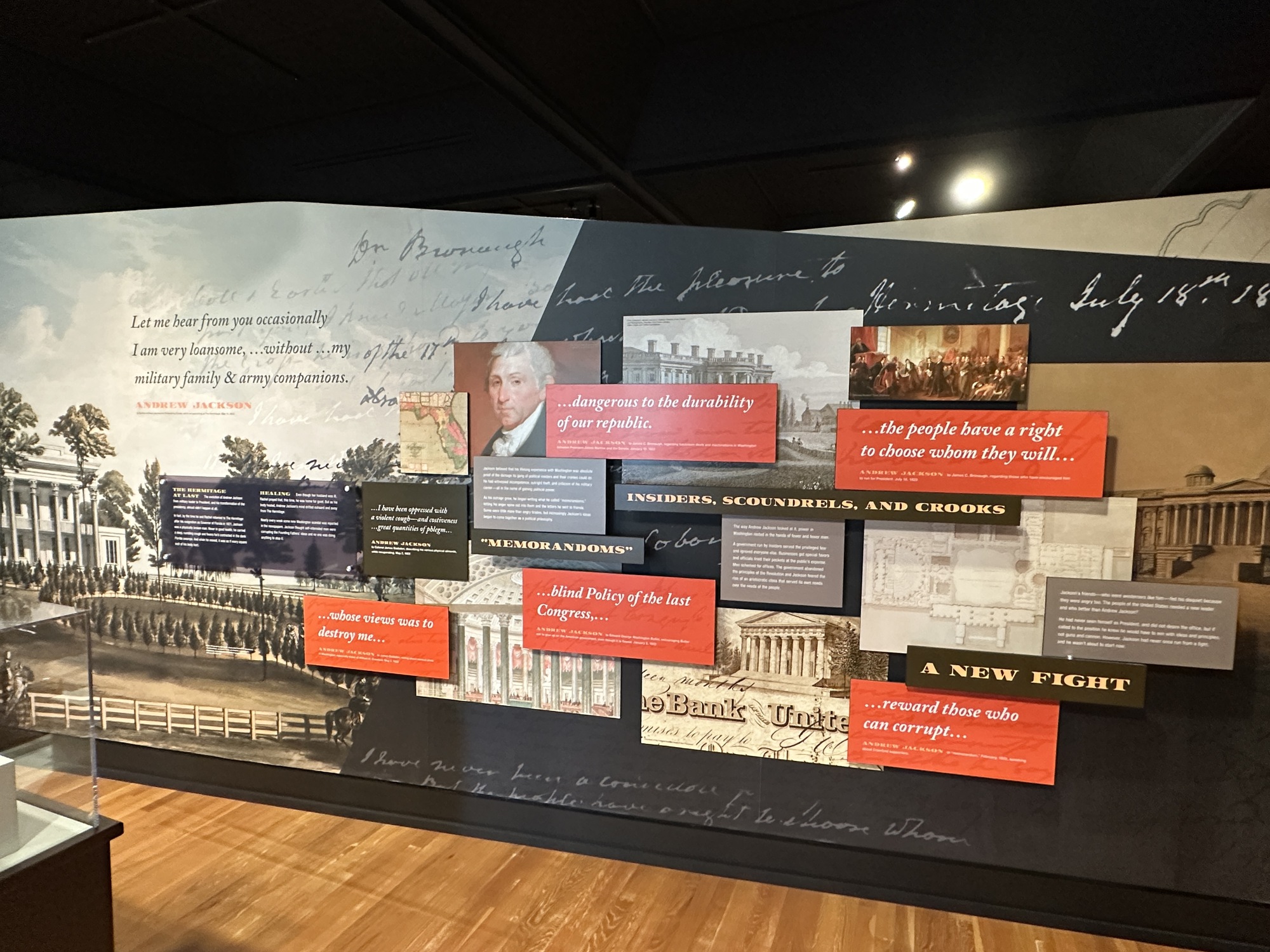
The presentation was a little overwhelming with all its floating boxes and pull-quotes. It’s kind of cool looking in aggregate, but I didn’t find it easy to follow. My eyes tended to wander and never quite land on anything long enough to read it.
A lot of space was dedicated to Jackson’s love for his wife, Rachel, who died just before his presidency, and Jackson’s grievances against the political machinations that cost him the presidency the first time he ran in 1824. Maybe I just got tired of reading, but it seemed like it was relatively light on his two actual terms in office.
Here’s how the museum sums up his time as president:
America during the Age of Jackson was a nation brimming with possibility and growing into a golden young adulthood. Born far from the wealthy elite, Jackson was able to expand the powers of the President beyond any before him. In so doing, he changed the government in ways that still stand today.
Jackson also fought hard to restore a nation of “We the People” and give voice to all those he represented as President. Sadly, this expansion of democracy did not include everyone. Slavery remained a pervasive part of American society—as did the continuing displacement of Native Americans—and opportunities for women and free blacks were still largely nonexistent under Jackson’s presidency.
Nevertheless, Jackson helped to inspire a uniquely American sense of promise and hope—that anyone could succeed through hard work and natural ability, rather than through unearned power and privilege.
Naturally, I kept waiting for it to mention the main thing I think people associate Jackson with today: the Trail of Tears. Here’s what the museum says about it, hidden behind a few taps on a touchscreen tucked in a corner.
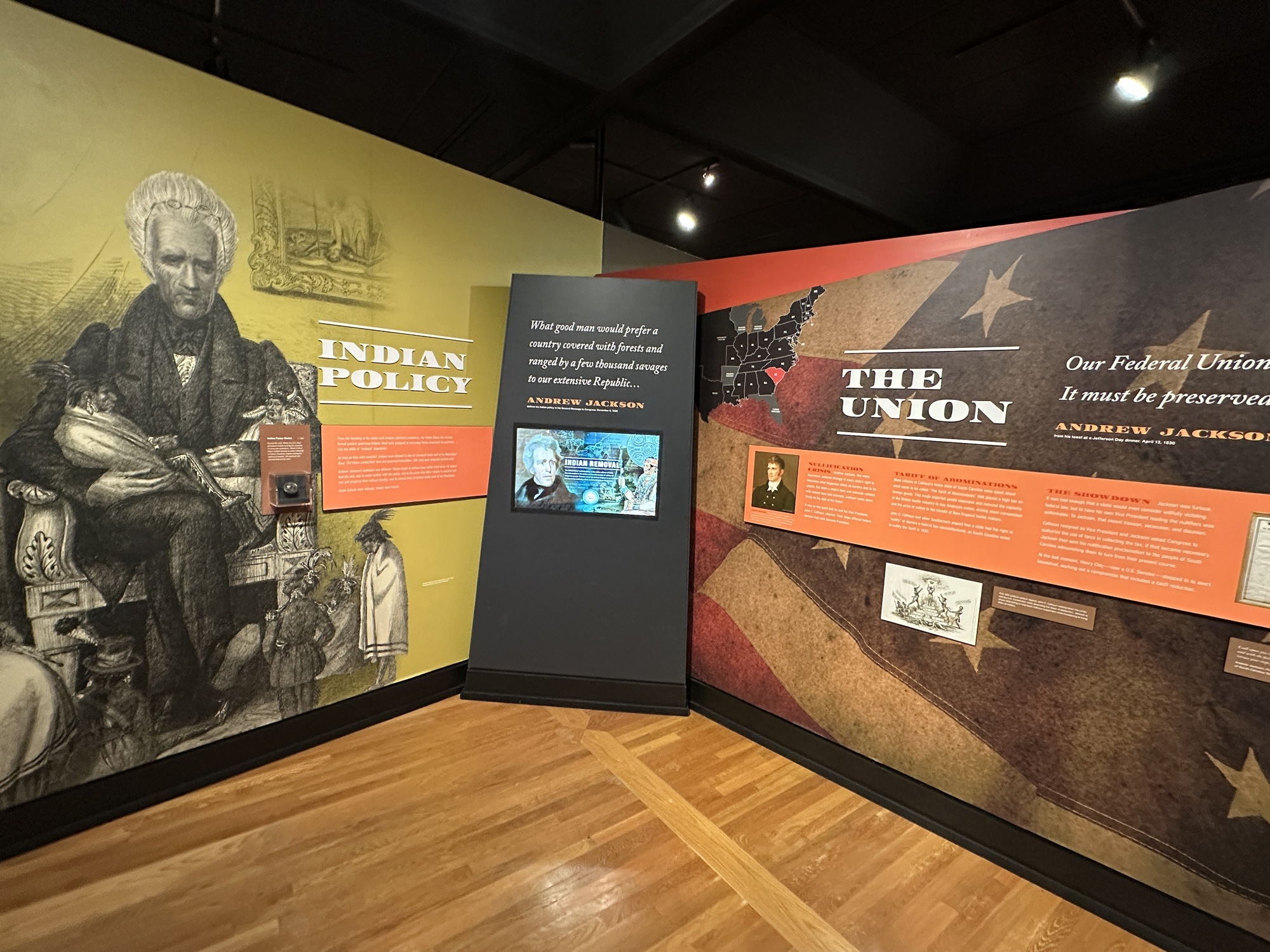
The touchscreen has a timeline of U.S. actions involving Native Americans from 1780 onwards. Andrew Jackson’s contributions to this saga are presented as blips on the 250-year timeline. First comes the Indian Removal Act, which Jackson signed in 1830:
Although the controversial law did not order the physical removal of American Indians, it established removal as policy and authorized the U.S. to negotiate treaties for relocation, covering all costs for travel and resettlement. … Jackson signed over 60 land cession agreements during his presidency, moving nearly 50,000 Indians to Indian Territory.
Then comes something called the Treaty of New Echota, which I must apologize for forgetting to take a picture of, but basically, in the touchscreen’s telling, this treaty laid the groundwork for one particularly deadly forced march of Indians, called the Trail of Tears, which … drumroll … did not happen under Andrew Jackson.
The majority of the Cherokee did not support the Treaty of New Echota and refused to relocate. After the two-year time limit elapsed, the U.S. Army and the Georgia State Militia forcefully removed more than 16,000 Cherokees and enforced a grueling 800-mile march to Oklahoma, through dry land without adequate transportation, food, medicine or supplies. An estimated 4,000 Cherokees perished. Although the Trail of Tears took place under President Martin Van Buren, the process was set in motion during Andrew Jackson’s presidency and was only one of many forced removals.
This was disorienting to read. Martin Van Buren did the Trail of Tears? Had my teachers mentioned that at some point, but I forgot? Have I been brainwashed by anti-Jackson propaganda?
Actually, it seems like the “Trail of Tears” moniker gets thrown around a bit. It’s either this specific forced march, or it’s a whole decade of Indian removals lumped together. I think I was familiar with the latter definition. I can understand why the Jackson museum goes with the former.
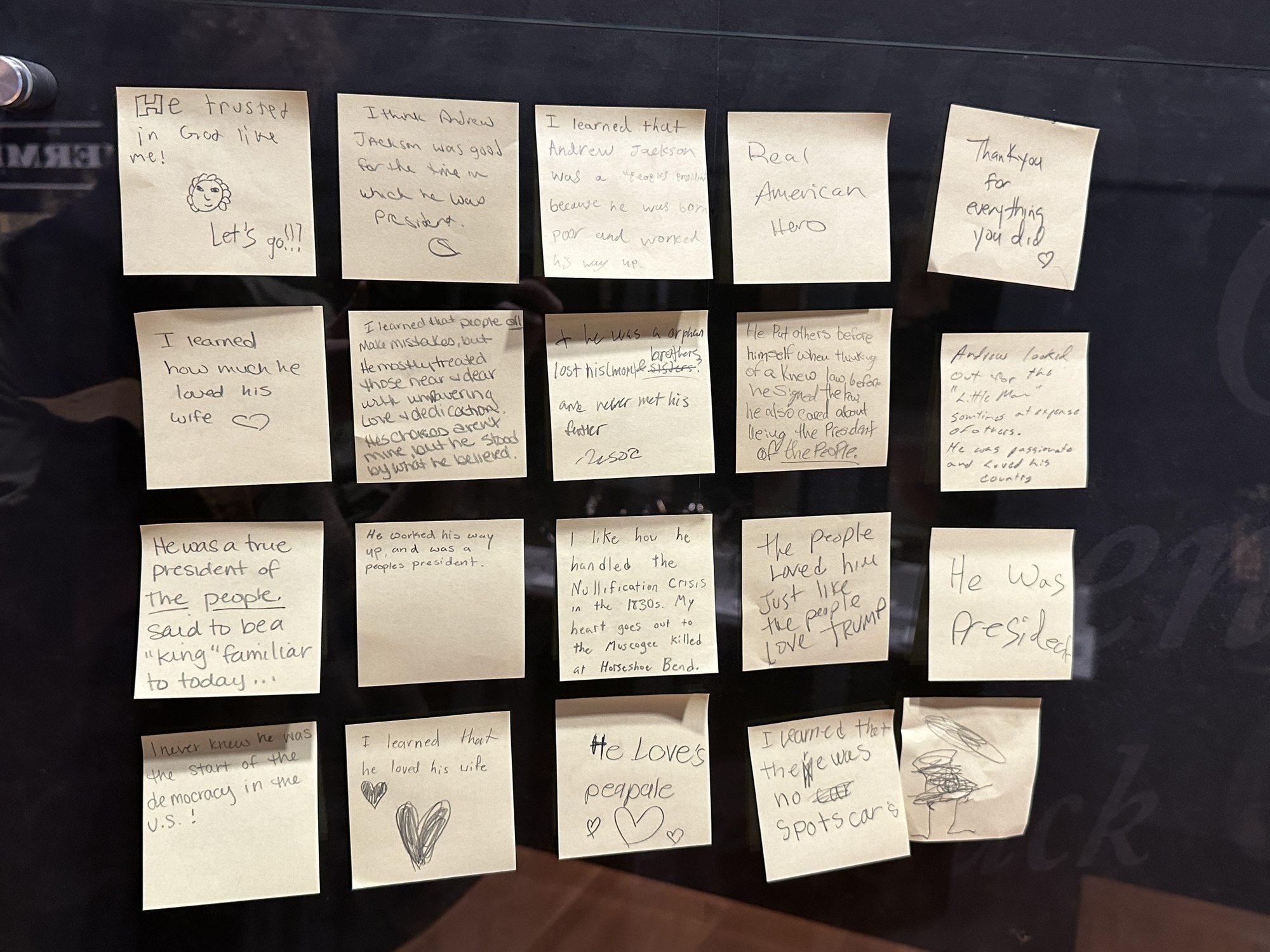
At the end of the museum, they had a wall where you could put a sticky note with something you learned. Here’s a sampling of what Americans took away from the Hermitage museum on March 30, 2026.
He trusted in God like me! Let’s go!!!
I learned that he loved his wife
I learned how much he loved his wife
I never knew he was the start of democracy in the U.S.!
The people loved him just like the people love Trump
I learned that people all make mistakes, but he mostly treated those near and dear with unwavering love and dedication. His choices aren’t mine, but he stood by what he believed.
The mansion
Around the corner from the museum is the mansion Jackson built and lived in during the last part of his life. Its current form dates to 1837, when he retired from office. He and Rachel had originally lived here in a log cabin.
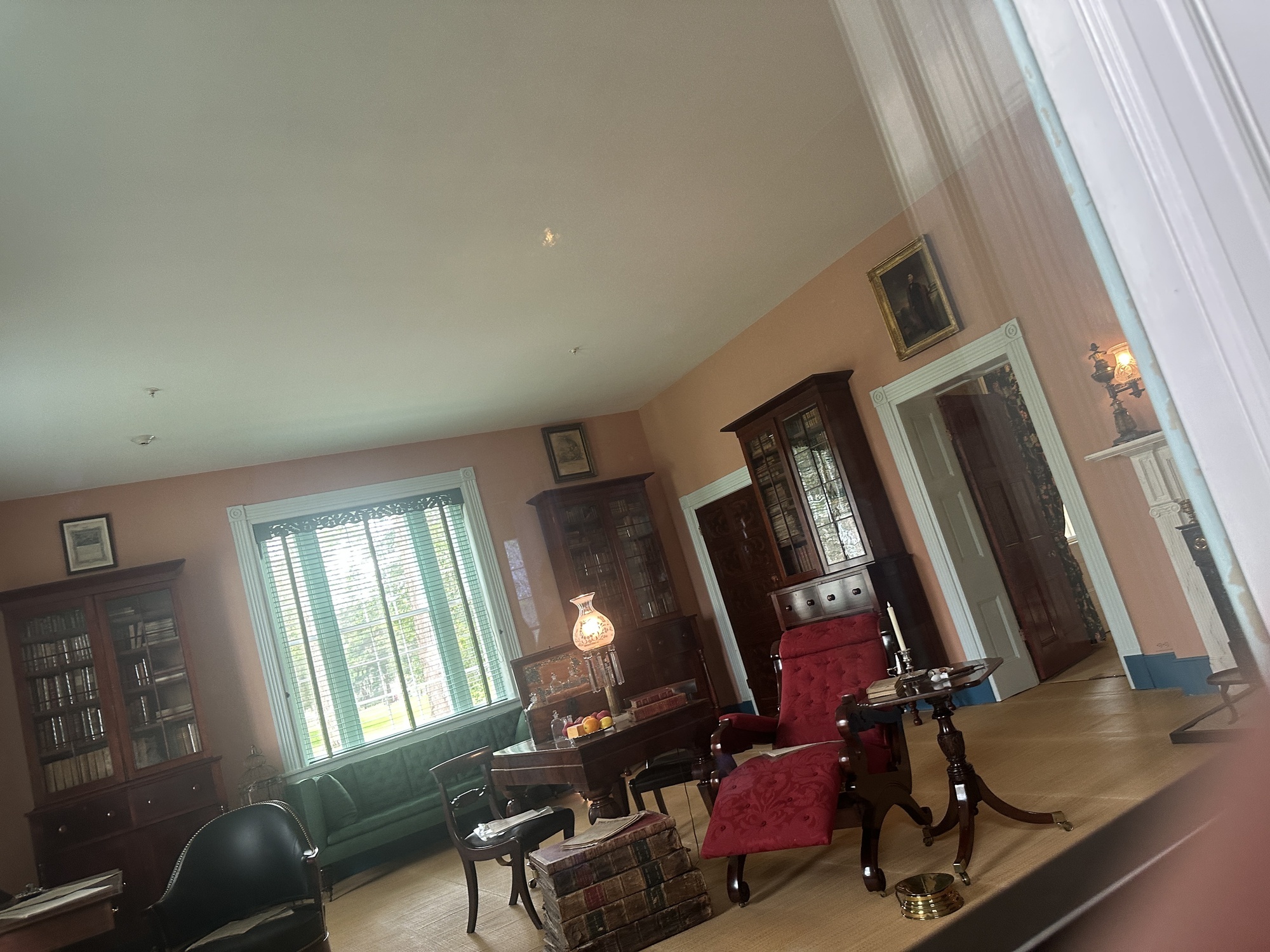
The staff didn’t want us taking photos inside, but I did it anyway. Forgive the blurriness and haphazard framing. Here’s the main entrance hall.
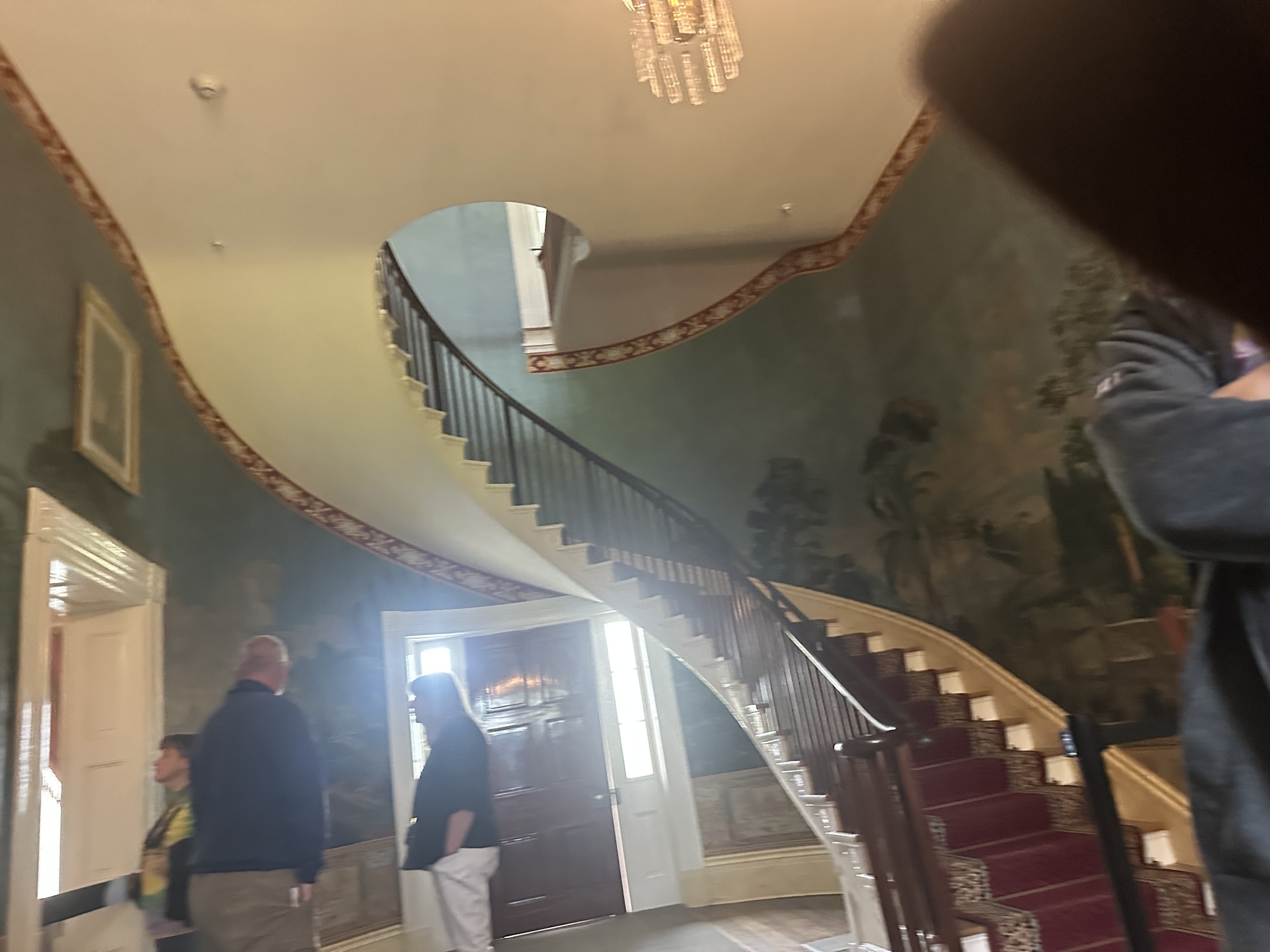
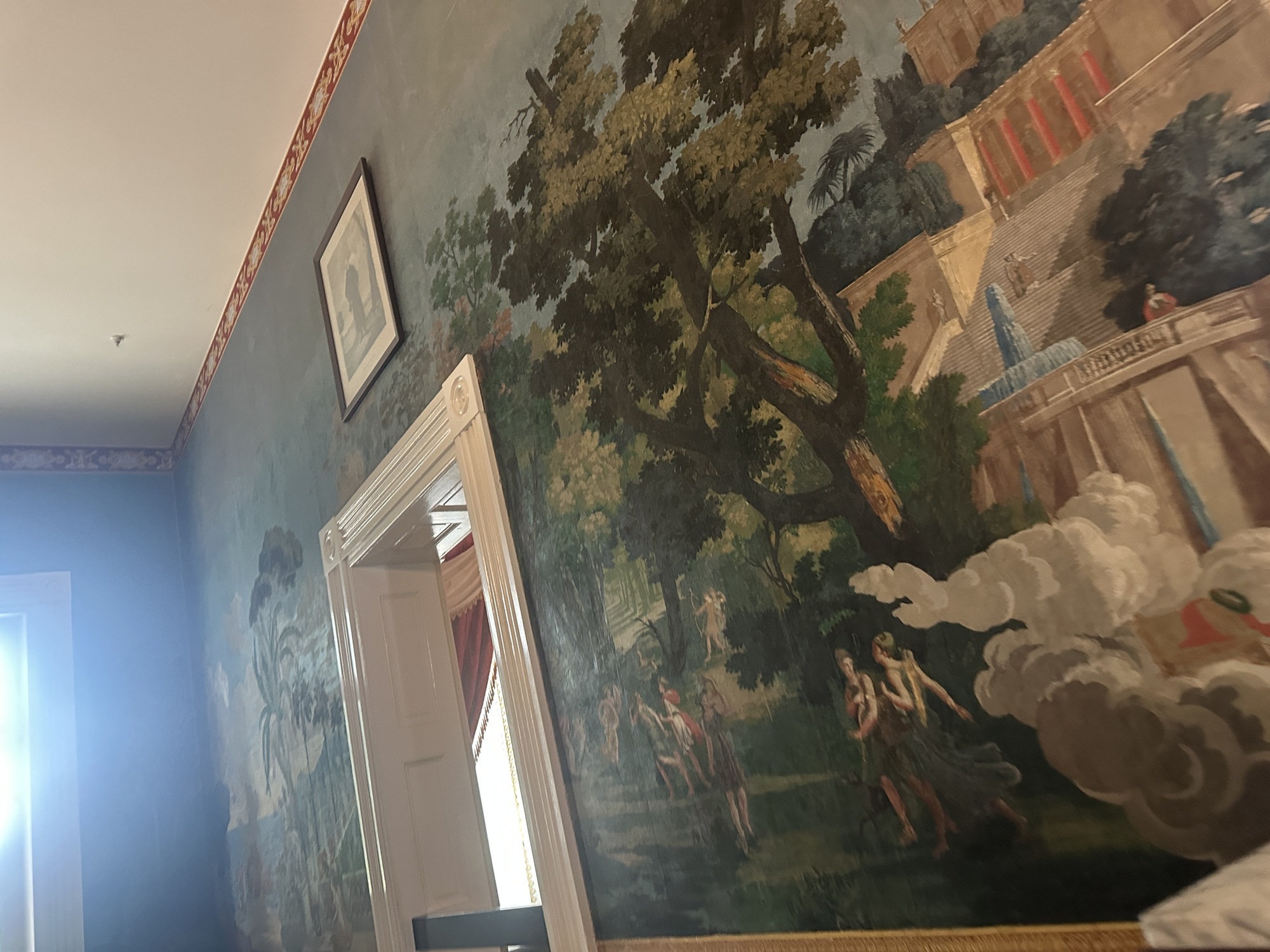
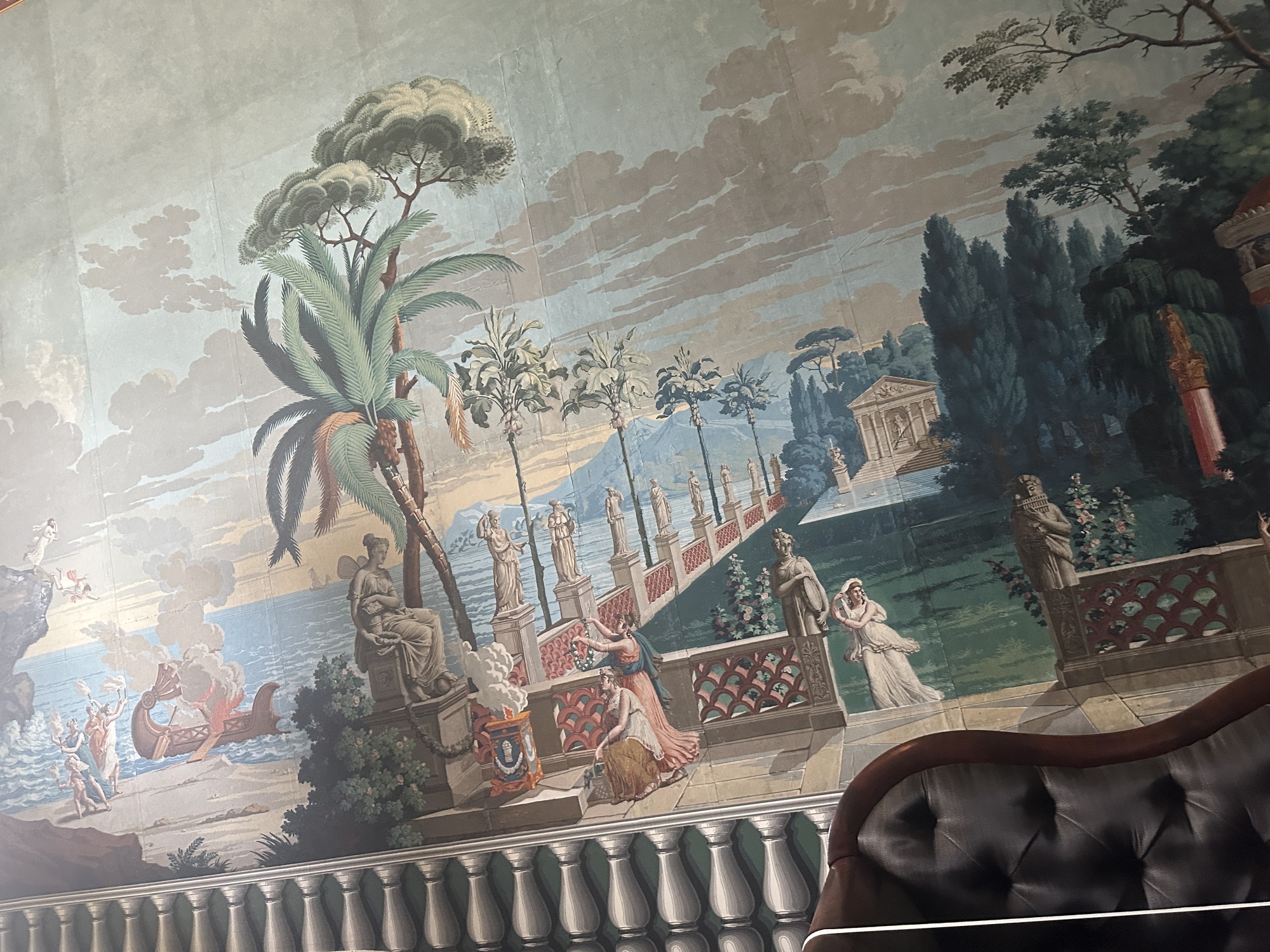
The main thing that stuck out to me was the wallpaper, all original, depicting various classical and mythological scenes. This needs to come back in style. I want scenes on my walls.
Another cool room was Jackson’s personal study. The huge books on the ground contain newspapers, which Jackson bound and archived for later reference. He spent the last years of his life being wheeled around the house in the red chair. The tour guide kept telling us that “a lot of American history was made in this room” as future presidents and politicians came here to confer with Jackson.
The tomb
Andrew Jackson is buried on the property, along with his wife and some of his descendants. The tomb of Andrew and Rachel is quite nice.
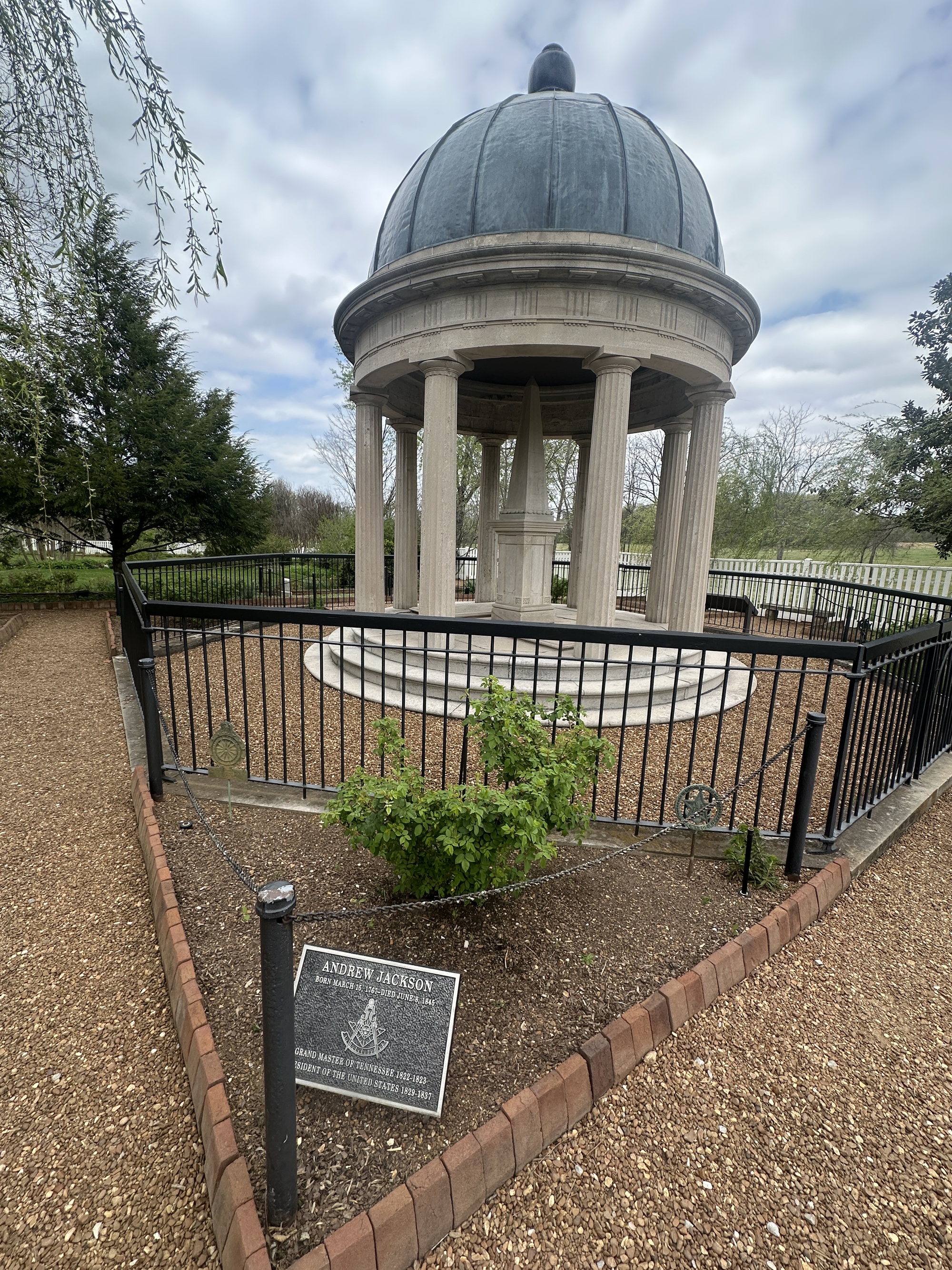
Somewhat comically and somewhat poignantly, next to the tomb is a humble headstone for Uncle Alfred, a slave who lived nearly his entire life — nearly the entire 19th century — on the Hermitage, including after emancipation.
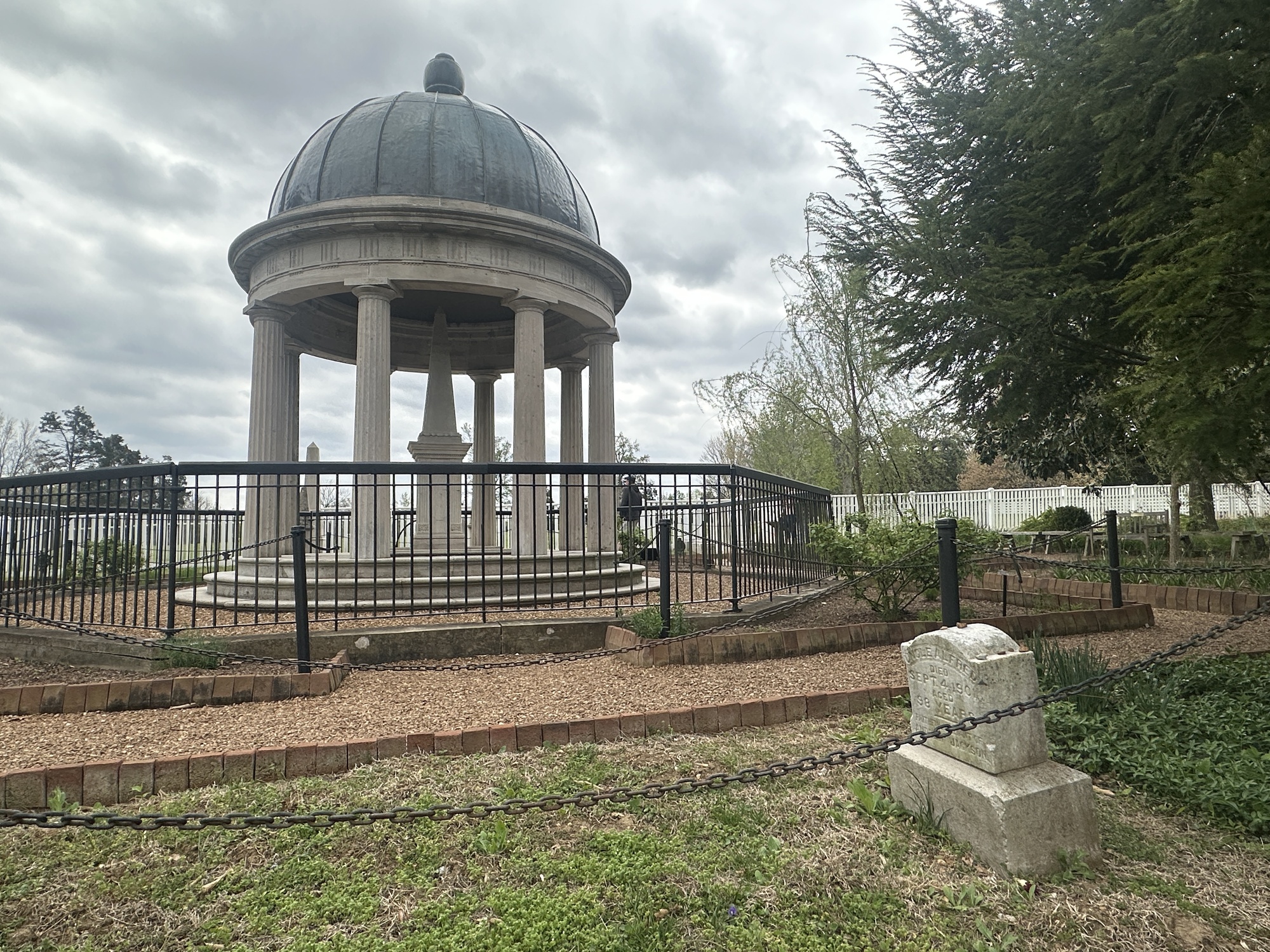
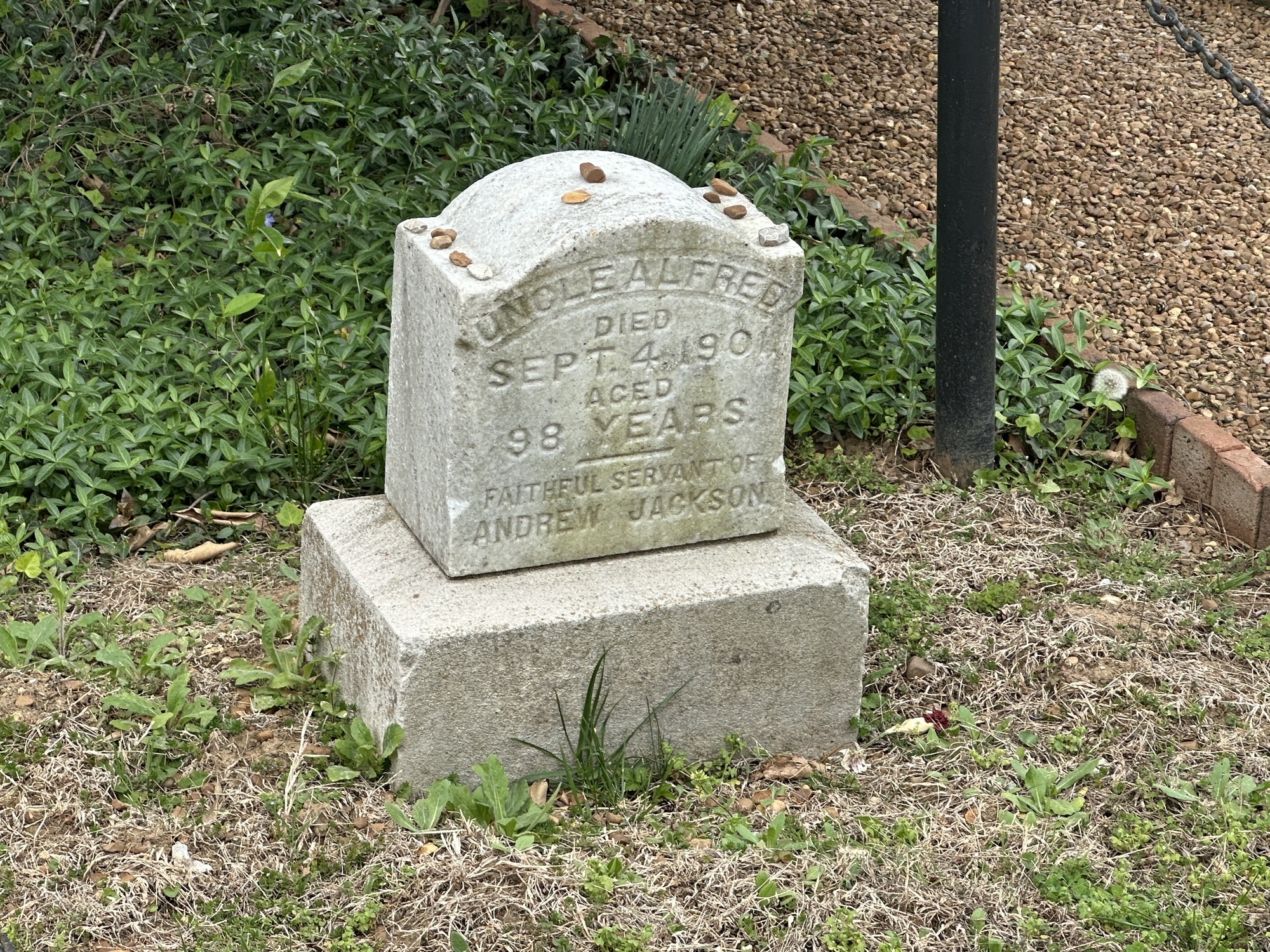
I at first pitied Alfred’s little grave, dwarfed by the Jacksons’ neoclassical gazebo, but then learned he’d chosen this resting place himself. According to one of the signs, Alfred gave the Ladies’ Hermitage Association (the original group dedicated to preserving the Hermitage) “a mirror … in return for their promise to bury him next to Andrew and Rachel Jackson’s tomb.” Maybe this was kind of a power move on Alfred’s part? Or maybe it’s evidence of some kind of slave-master bond that’s not entirely comfortable to acknowledge? Either way, it’s a thought-provoking scene.
The gift shop
Here’s a quick look at the gift shop.

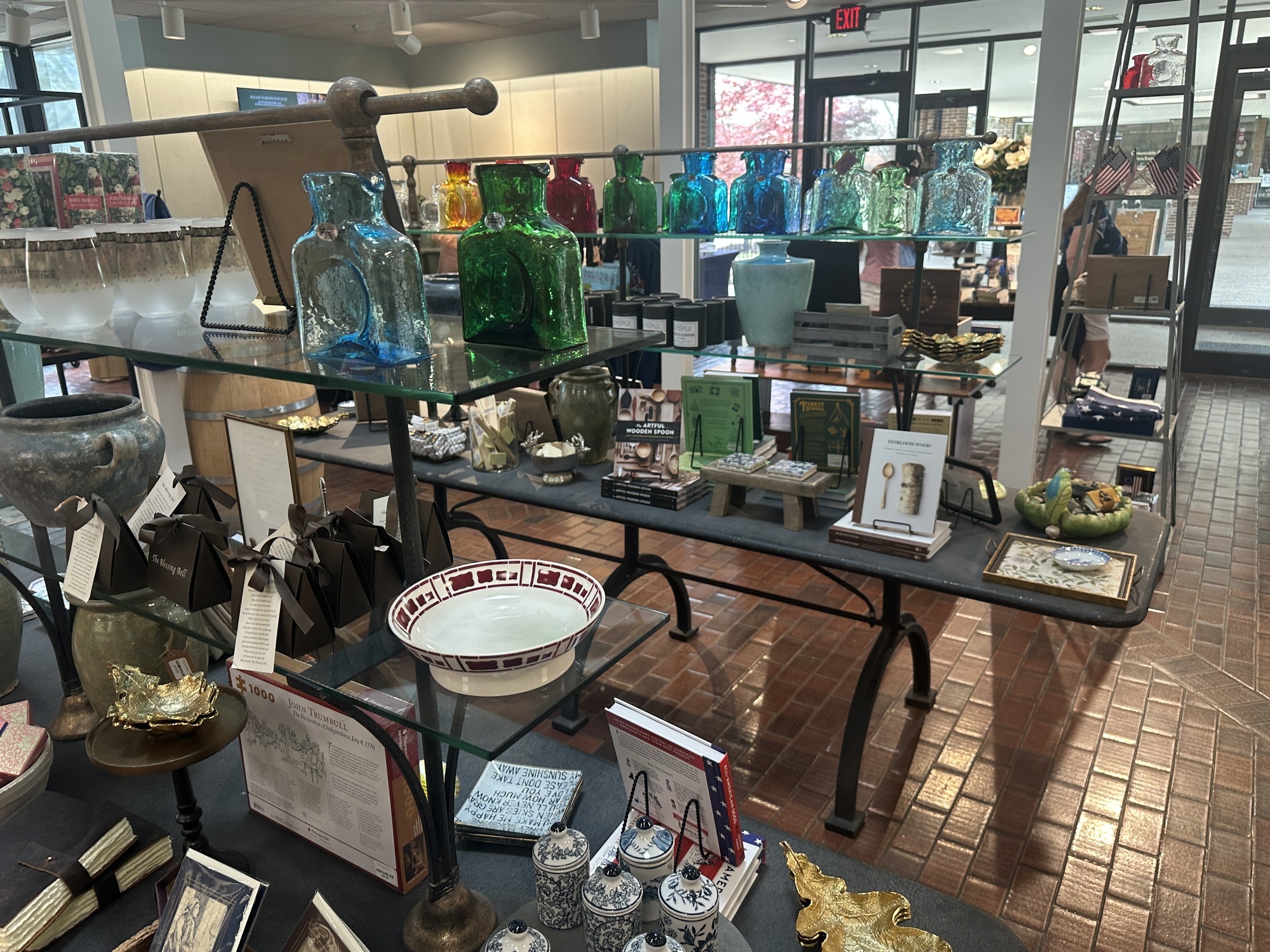
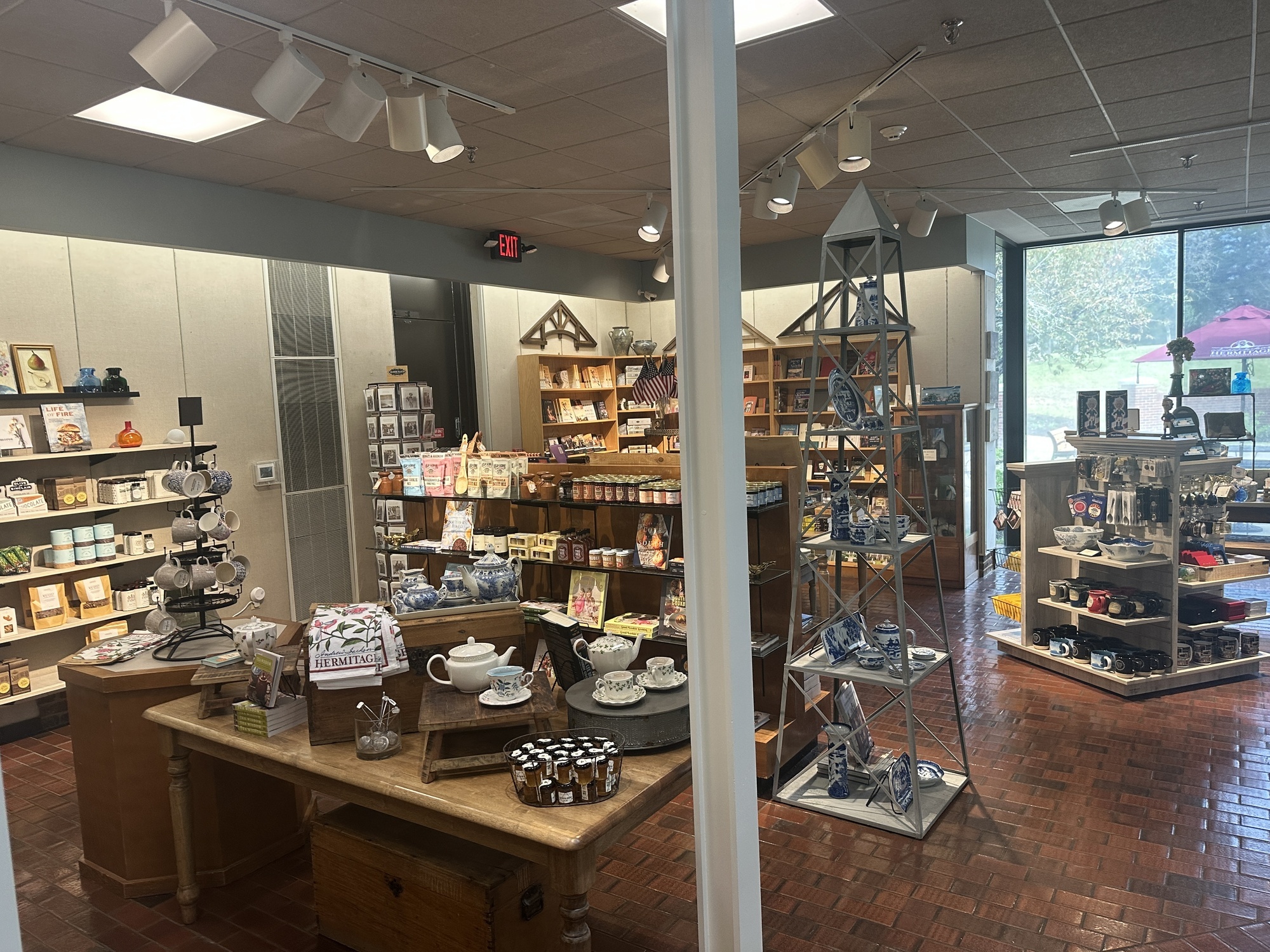
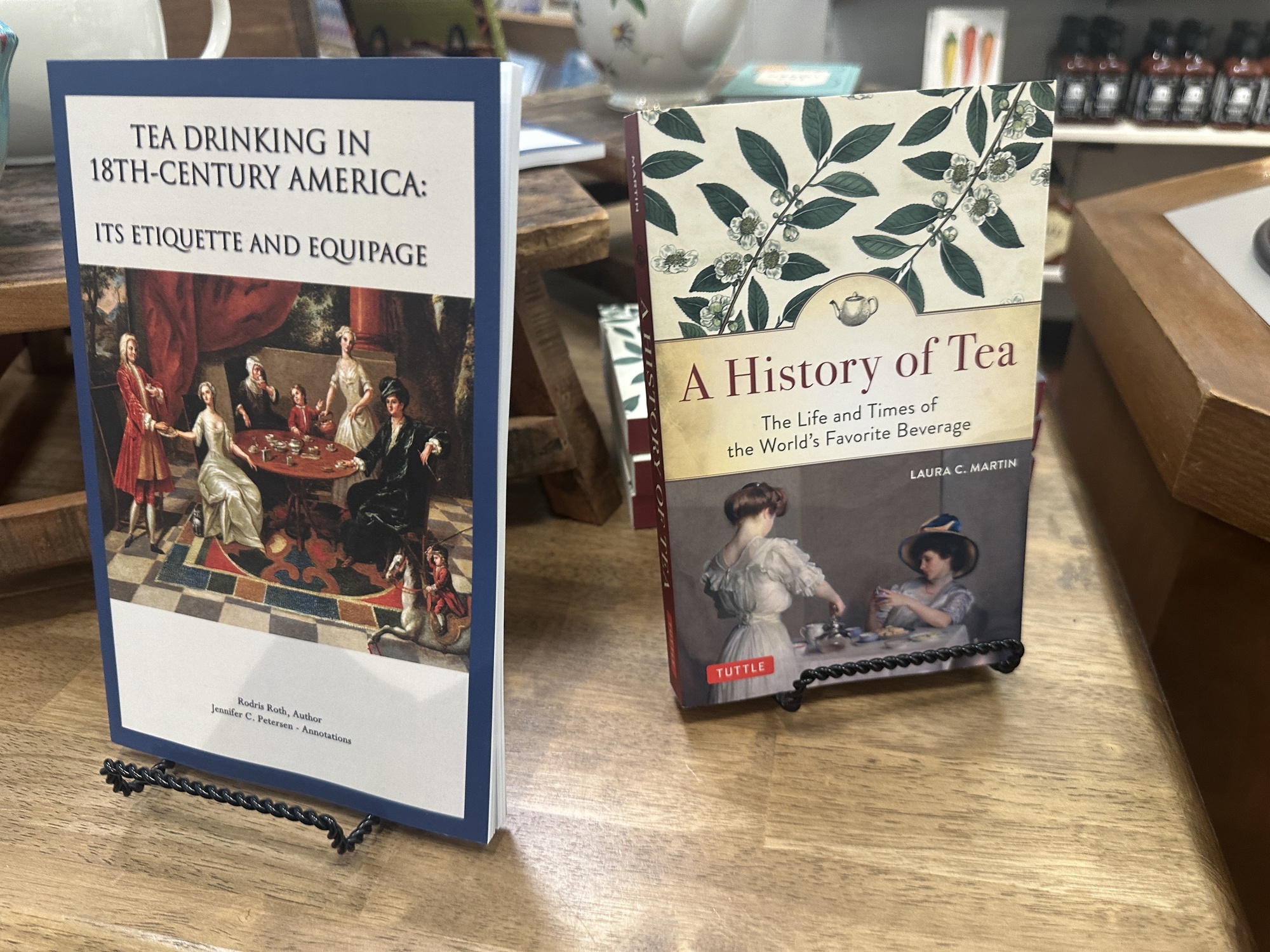
The main thing I liked was the amount of room dedicated to old-school teaware and tea culture, including a niche book I almost bought but knew I’d never get around to reading: “Tea Drinking in 18th-Century America: Its Etiquette and Equipage.”
For those keeping score, this was my third presidential museum, following the Gerald Ford in Grand Rapids, Michigan, and the Rutherford B. Hayes (which also featured Hayes’ well-preserved mansion) in Fremont, Ohio.
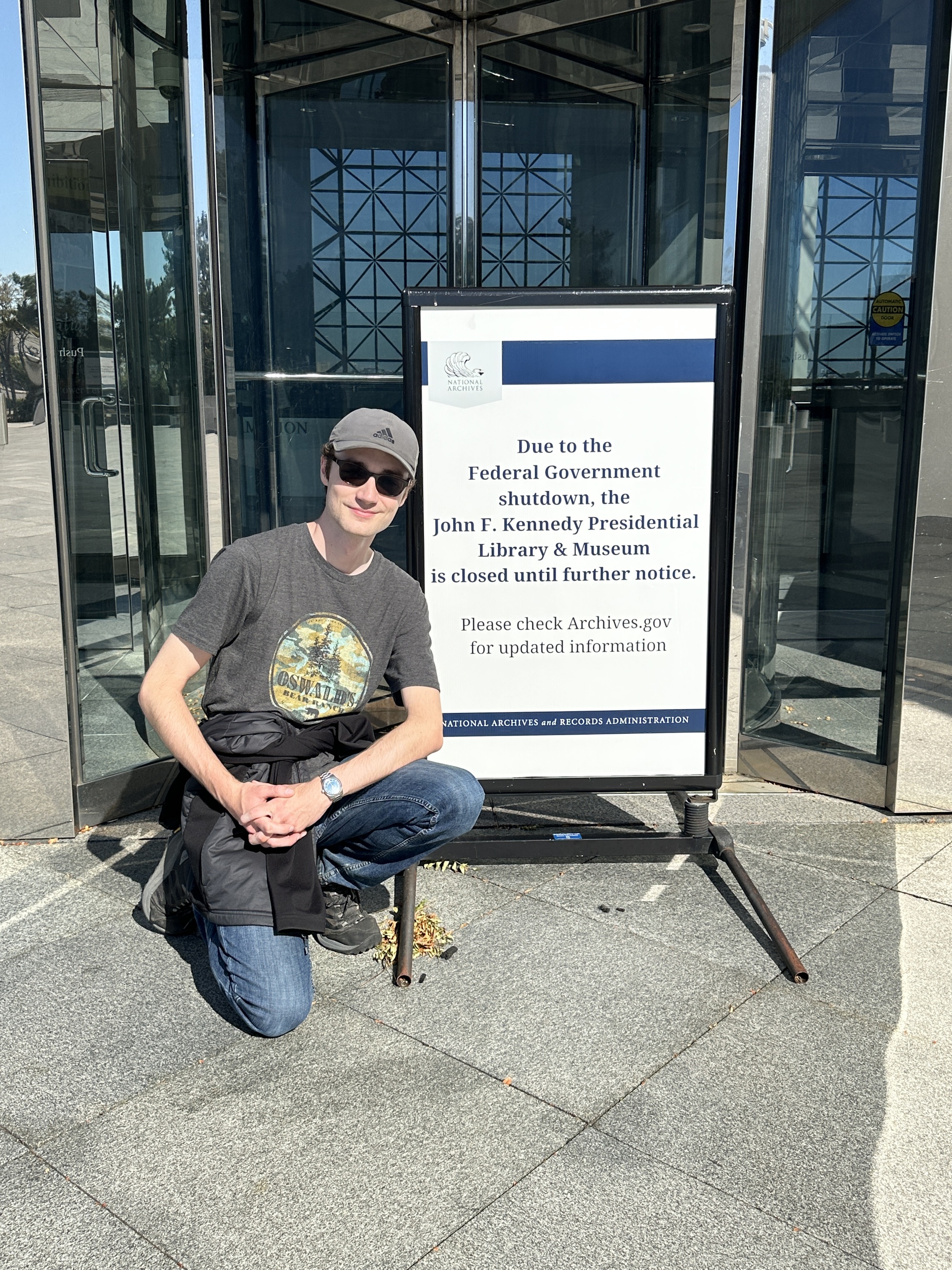
I also tried to visit the JFK museum in Boston, but the longest government shutdown in U.S. history had recently begun, so it was closed. Must go back!
Comments
Leave a comment